20 Jan 2026
Key takeaway / Summary of topic answer
Carbon reduction measures are essential mechanisms for lowering greenhouse gas emissions through efficient energy management and the promotion of clean energy. These measures play a vital role in mitigating climate change and restoring cleaner air to urban environments. At One Bangkok, these strategies have been practically implemented through smart technologies and internationally recognised green building standards, setting a benchmark for low-carbon urban development that prioritises long-term sustainability and quality of life.
Table of Content
1. Energy Conservation
2. Use of Renewable Energy
3. Improving Production Processes
4. Enhancing Transport Efficiency
1. Reducing Global Warming
2. Improving Air Quality
3. Supporting Sustainable Development
4. Creating Economic Opportunities
1. Energy-Efficient and Low-Carbon Design
2. Green Architecture and Global Standards
3. Green Spaces and Air Quality
4. Promoting Environmentally Friendly Mobility
Q: What are carbon reduction measures and what do they cover?
Q: How do green buildings help reduce carbon emissions?
Q: Do green spaces in property developments genuinely help manage carbon emissions?
Q: How does smart mobility design reduce the urban carbon footprint?
Amid the escalating impacts of global climate change, the concept of “sustainability” is no longer an abstract marketing trend. It has become an urgent necessity and a pathway to survival, particularly in the context of urban development, which is one of the largest sources of greenhouse gas emissions. Understanding what carbon reduction measures are, and applying them effectively is therefore a critical factor in shaping the quality of life for future generations. This article explores the importance of carbon reduction measures, explains why they are essential to urban development, and highlights how model cities are putting these principles into practice in a tangible and measurable way.
What Are Carbon Reduction Measures?
Carbon reduction measures refer to a systematic set of strategies, activities, and engineering processes designed to reduce carbon dioxide emissions and other greenhouse gases released into the atmosphere. These measures can be applied across multiple levels, from individual households to large-scale industrial operations.
They function as policy and technological tools that drive the transition from traditional consumption and production models towards a low-carbon society. Broadly, carbon reduction measures can be categorised as follows.
1. Energy Conservation
This is the most fundamental, cost-effective, and impactful approach. It focuses on reducing energy demand in residential buildings, factories, and office spaces through architectural design that minimises heat accumulation, the use of high-efficiency electrical appliances, and smart home technologies that automatically control lighting and air conditioning based on actual usage.
2. Use of Renewable Energy
This measure involves shifting from fossil fuels to clean, renewable energy sources such as solar power, wind energy, and biomass. Examples include installing rooftop solar panels for on-site electricity generation, which can significantly reduce the carbon footprint of both organisations and cities.
3. Improving Production Processes
In industrial and construction sectors, carbon reduction measures cover waste reduction, the use of environmentally friendly and low-carbon materials, recycled materials, and production processes designed to maximise output while minimising resource consumption.
4. Enhancing Transport Efficiency
The transport sector is one of the largest contributors to carbon emissions. Measures in this area focus on developing seamless public transport networks, reducing reliance on private vehicles, promoting electric vehicles (EVs), and designing cities that support walking and cycling.
Why Is Carbon Reduction Important?
Why has carbon reduction become a global priority? The answer extends far beyond economic indicators. Reducing carbon emissions has a direct impact on human survival and quality of life across multiple dimnsions.
1. Reducing Global Warming
The primary goal is to limit the rise in global temperatures to no more than 1.5°C, in line with the Paris Agreement (2015). Without urgent carbon reduction efforts, climate-related disasters such as flash floods, droughts, and rising sea levels will intensify, potentially making coastal cities uninhabitable.
2. Improving Air Quality
Reducing fossil fuel combustion directly lowers PM2.5 levels and other air pollutants that cause respiratory diseases. Carbon reduction, therefore, equates to restoring clean air for urban populations.
3. Supporting Sustainable Development
Carbon reduction promotes responsible resource management, ensuring that natural resources and healthy environments are preserved for future generations rather than depleted prematurely.
4. Creating Economic Opportunities
The green economy increasingly drives the modern economy. Cities and organisations with clear carbon reduction measures attract investment, appeal to skilled talent, and achieve long-term operational cost savings through energy efficiency.
One Bangkok: A Smart City That Promotes Carbon Reduction
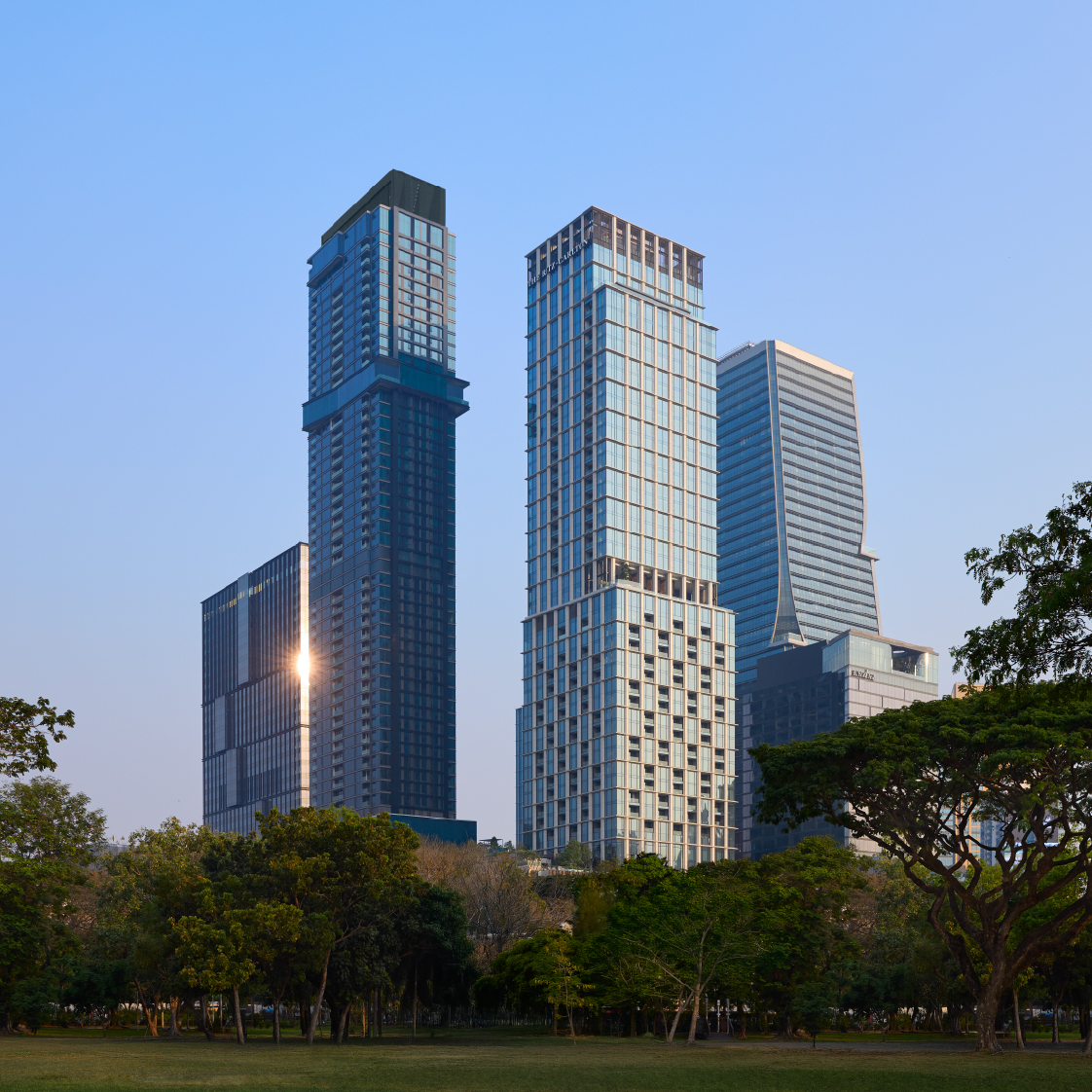
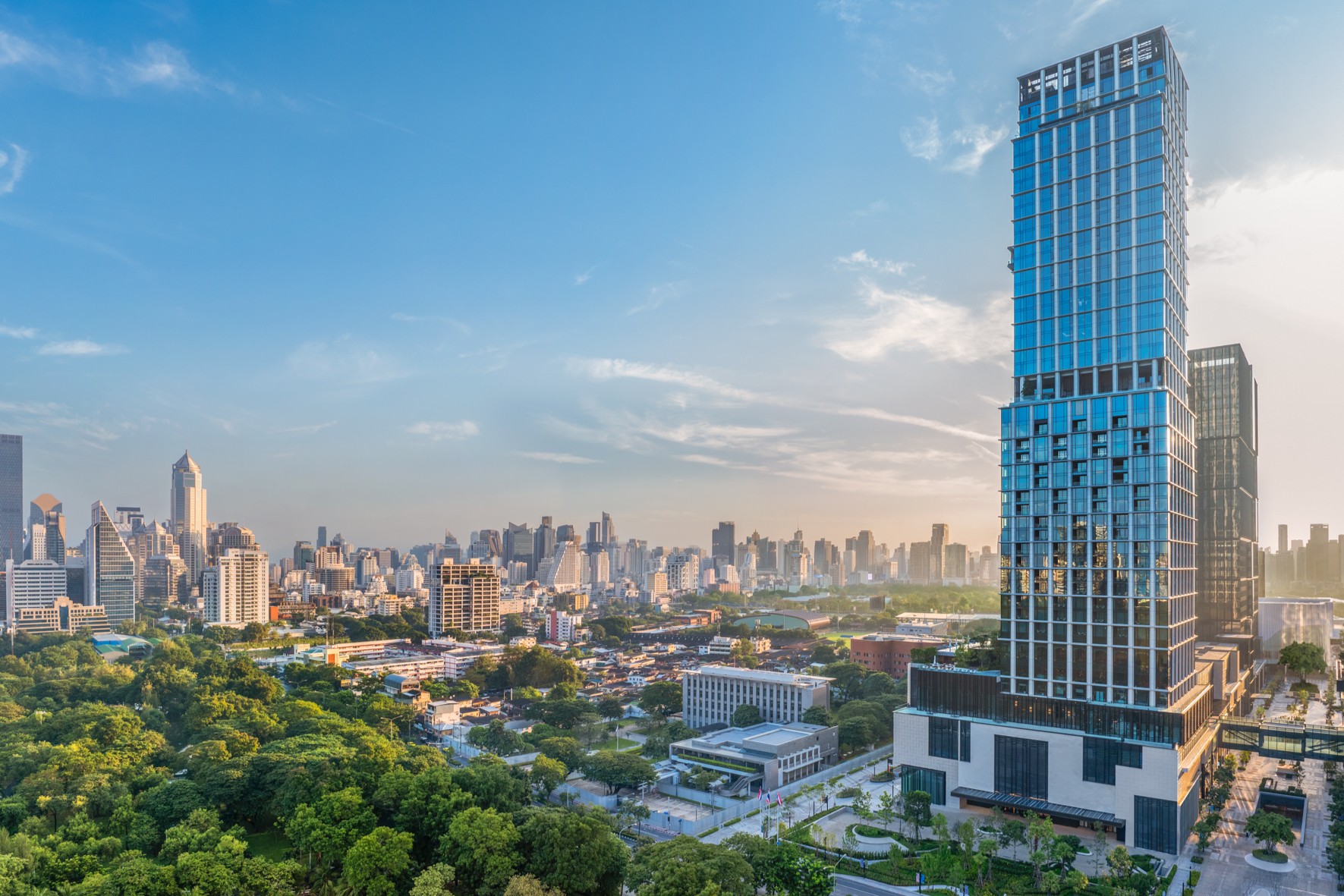
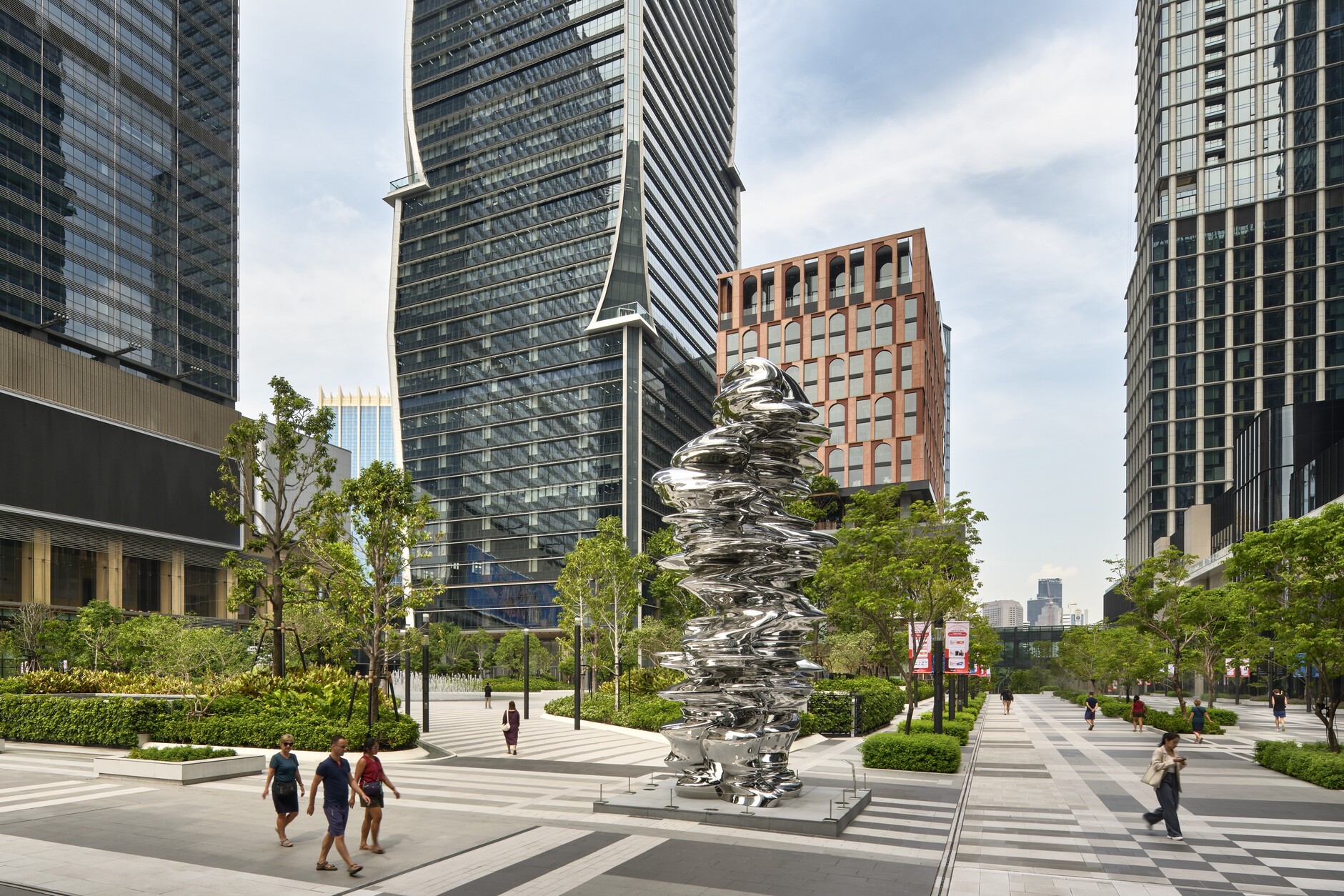
When carbon reduction measures are implemented in practice, the result is a future-ready city that balances people, technology, and the planet. One Bangkok demonstrates how carbon reduction measures can be integrated into every aspect of urban development, setting a new standard for sustainable city development at both national and global levels.
Rather than focusing solely on high-rise construction, the project creates a holistic urban ecosystem aligned with the Sustainable Development Goals (SDGs), combining technology and design to deliver tangible climate benefits.
1. Energy-Efficient and Low-Carbon Design
One Bangkok employs advanced energy-saving technologies, with a centralised cooling system at its core. This innovation reduces energy consumption by up to 22 percent compared with conventional air-conditioning systems, cutting carbon emissions by approximately 9,000 tonnes per year, equivalent to saving 17,000 megawatt-hours of electricity annually.
In addition, smart grid systems and a Central Utility Plant (CUP) operate as a 24-hour intelligent command centre, managing electricity and water through more than 250,000 smart sensors across the site. Overall, the project reduces carbon dioxide emissions by up to 35,540 tonnes per year.
2. Green Architecture and Global Standards
Carbon reduction begins at the construction stage. One Bangkok targets the highest international standards, including LEED for Neighbourhood Development (LEED-ND) Platinum and TREES-NC Platinum certifications. Over 75 percent of construction waste is recycled, while low-VOC materials are used to ensure superior indoor air quality.
Buildings are designed with high-performance insulation and Low-E glass to reduce heat transfer, thereby lowering air-conditioning demand and delivering highly effective indirect carbon reduction.
3. Green Spaces and Air Quality
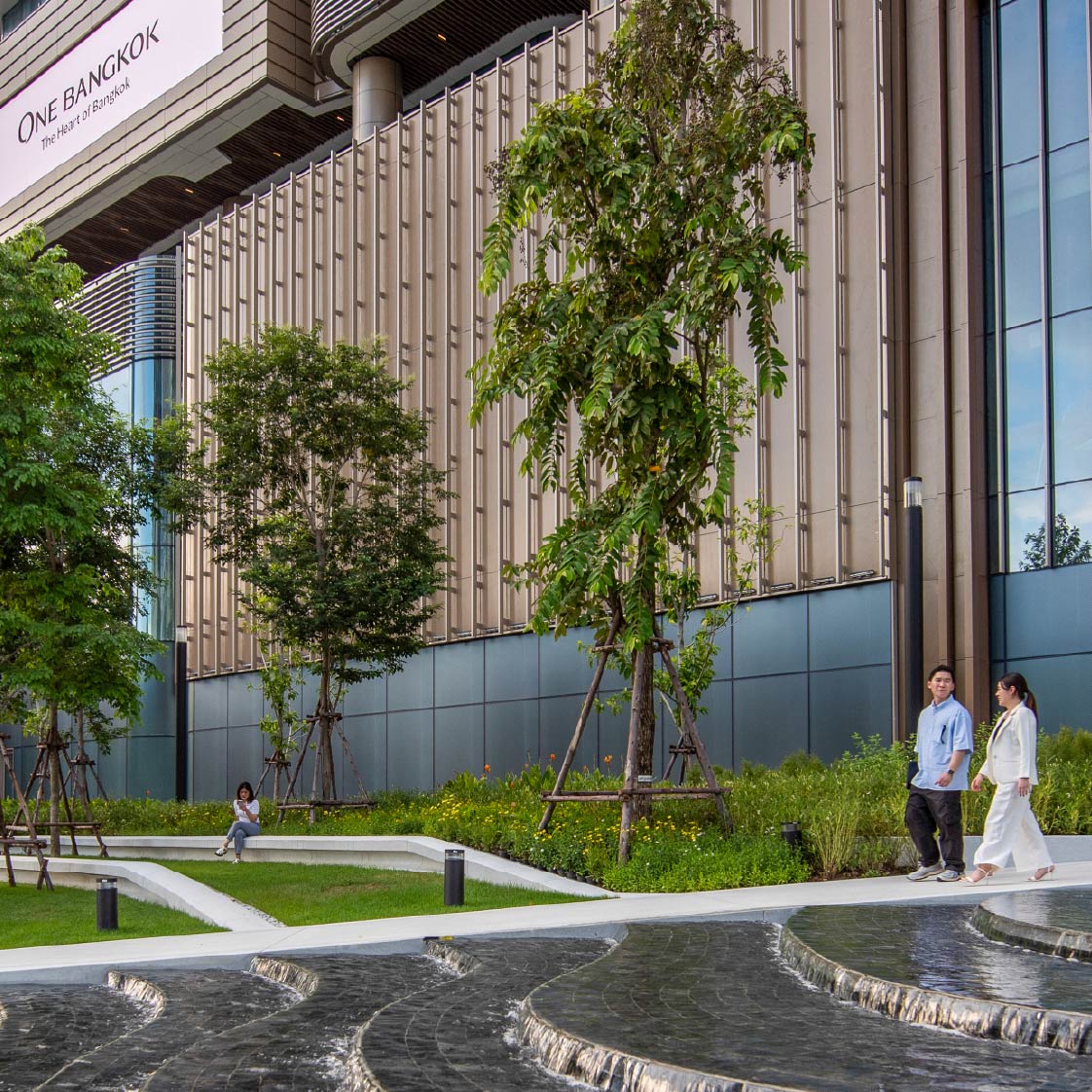
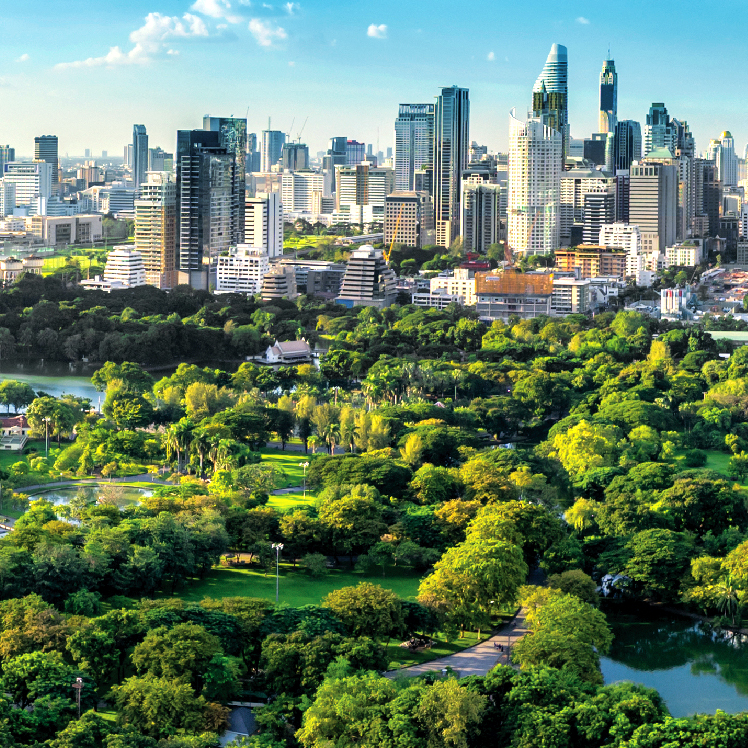
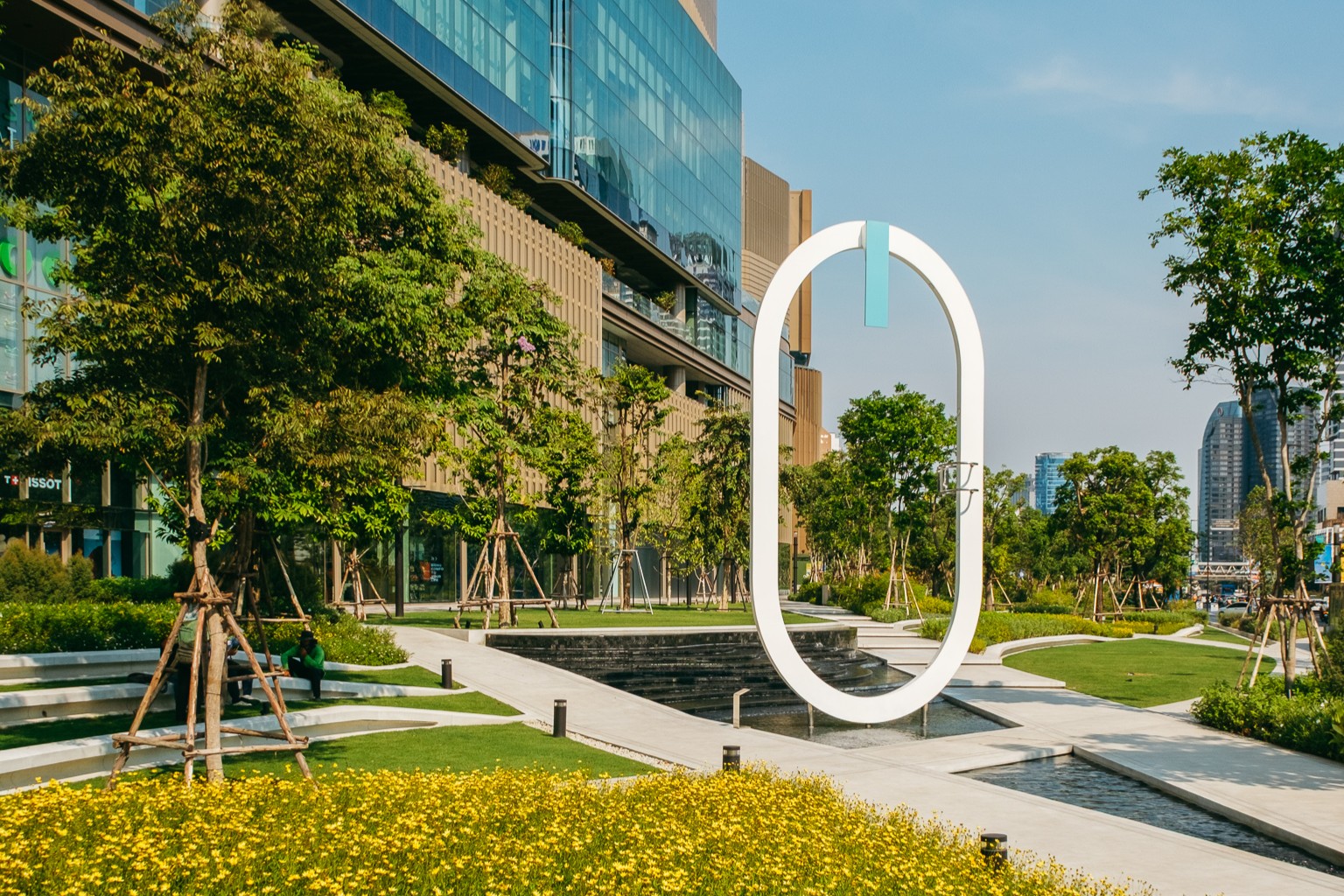
To combat the urban heat island effect, more than 50 percent of the project area, approximately 50 rai, is dedicated to green and open spaces connected to Lumphini Park and Benjakitti Park. This network acts as a new “green lung” for Bangkok. Over 178 plant species help absorb carbon dioxide, trap airborne particulates, and increase oxygen levels naturally.
4. Promoting Environmentally Friendly Mobility
Transport-related carbon reduction is achieved through human-centred urban design. The development features over five kilometres of shaded, walkable pathways with direct MRT Lumphini connectivity and EV shuttle services which link to BTS Phloen Chit. EV charging points and bicycle parking further support low-emission mobility, reinforcing the vision of a smart and sustainable city.
Carbon reduction measures form the foundation of building cities that are both sustainable and environmentally responsible. At One Bangkok, these principles have been implemented in every dimension of development, positioning the project as a model green city and a smart and sustainable city that places genuine care for the planet at its core. Experience low-carbon urban living where advanced technology is seamlessly integrated with expansive green spaces, and explore an approach to city development that enhances quality of life whilst ensuring long-term protection of the environment at One Bangkok.
FAQ
Frequently Asked Questions About Carbon Reduction Measures
Q: What are carbon reduction measures and what do they cover?
A: Carbon reduction measures are strategies designed to reduce carbon dioxide emissions across energy use, renewable energy adoption, industrial processes, construction practices, and environmentally friendly transport systems, helping to mitigate climate change.
Q: How do green buildings help reduce carbon emissions?
A: Green buildings reduce carbon through energy- and water-efficient design, natural lighting, thermal insulation, and sustainable materials, significantly lowering electricity demand compared to conventional buildings.
Q: Do green spaces in property developments genuinely help manage carbon emissions?
A: Yes. Trees naturally absorb carbon dioxide. At One Bangkok, more than 50 percent of the site is dedicated to green and open spaces to absorb greenhouse gases, capture dust particles, and lower surrounding temperatures.
Q: How does smart mobility design reduce the urban carbon footprint?
A: Designs that promote walking, integrate public transport (MRT and BTS), and provide EV charging reduce reliance on fossil-fuel vehicles, which are a major source of transport-related emissions.
Tag
SHARE

Another Premium Development by





Another Premium Development by