26 Dec 2025
Urban development today must adapt meaningfully to economic, social, and environmental change. The concept of the city of the future goes far beyond technological convenience. It reflects a deeper ambition: creating harmony between urban life and nature while preparing cities to face long-term challenges. The future city is designed to support wellbeing, resilience, and sustainability at every level of daily life.
Megatrends Shaping the Direction of Future Cities
To step into the future, it is essential to understand the global factors and megatrends driving these changes. This understanding is key to planning and developing urban infrastructure that addresses long-term needs.
1. Climate Change
Rising global temperatures and increasingly severe natural disasters affect urban living. As a result, future city design must prioritise carbon reduction and environmental balance. This includes expanding green spaces, implementing effective rainwater management systems, adopting renewable energy, and developing environmentally responsible buildings that prevent long-term ecological impact.
2. Digital Technology
Technology is becoming the backbone of urban management. Future cities rely on Internet of Things (IoT) networks and artificial intelligence to enhance efficiency, from intelligent traffic control to automated energy systems. These capabilities form the foundation of a truly connected and responsive smart city, enabling real-time decision-making and improved quality of life.
3. Social and Demographic Change
Cities must evolve to accommodate increasingly diverse populations. Ageing societies, migration of younger generations, and demand for creative and social spaces all influence urban planning. Accessible public spaces that support interaction across all age groups are essential to human-centred development and inclusive city design.
4. Circular Economy
The Circular Economy concept is vital for future smart city development. It focuses on waste reduction, maximising resource utilisation, and recycling, reuse, and reduction. Designing buildings and infrastructure based on this principle helps lessen the environmental burden and creates economic value.
Approaches to Developing the City of the Future
Turning future city concepts into reality requires a multi-dimensional approach that integrates design, environment, technology, and lifestyle.
1. Sustainable Design
At the heart of future cities is design that serves both people and the environment. This includes energy efficiency, water management, and overall quality of life. Modern cities must reduce dependence on fossil fuels and transition towards clean energy sources such as solar and wind power.
2. Creating Green Spaces
A well-designed city needs its own “lungs.” Parks, green corridors, and activity spaces allow people to reconnect with nature. Expanding green areas not only reduces air pollution and urban heat but also contributes positively to mental health and social well-being.
3. Integrated Living Hubs
The future city is not a single destination but a complete ecosystem where work, leisure, and daily life coexist. Integrating these functions in one place reduces travel demand, increases convenience, and lowers energy consumption associated with commuting, enabling a more balanced urban lifestyle.
4. Technology-Driven Urban Management
Applying AI and IoT to urban infrastructure enhances adaptability and quicker response to emergencies. Smart energy systems, intelligent traffic lights, real-time air quality monitoring, environmental sensors, and automated security systems allow cities to operate efficiently while maintaining safety and resilience. These capabilities represent the practical application of smart city technology in everyday life.
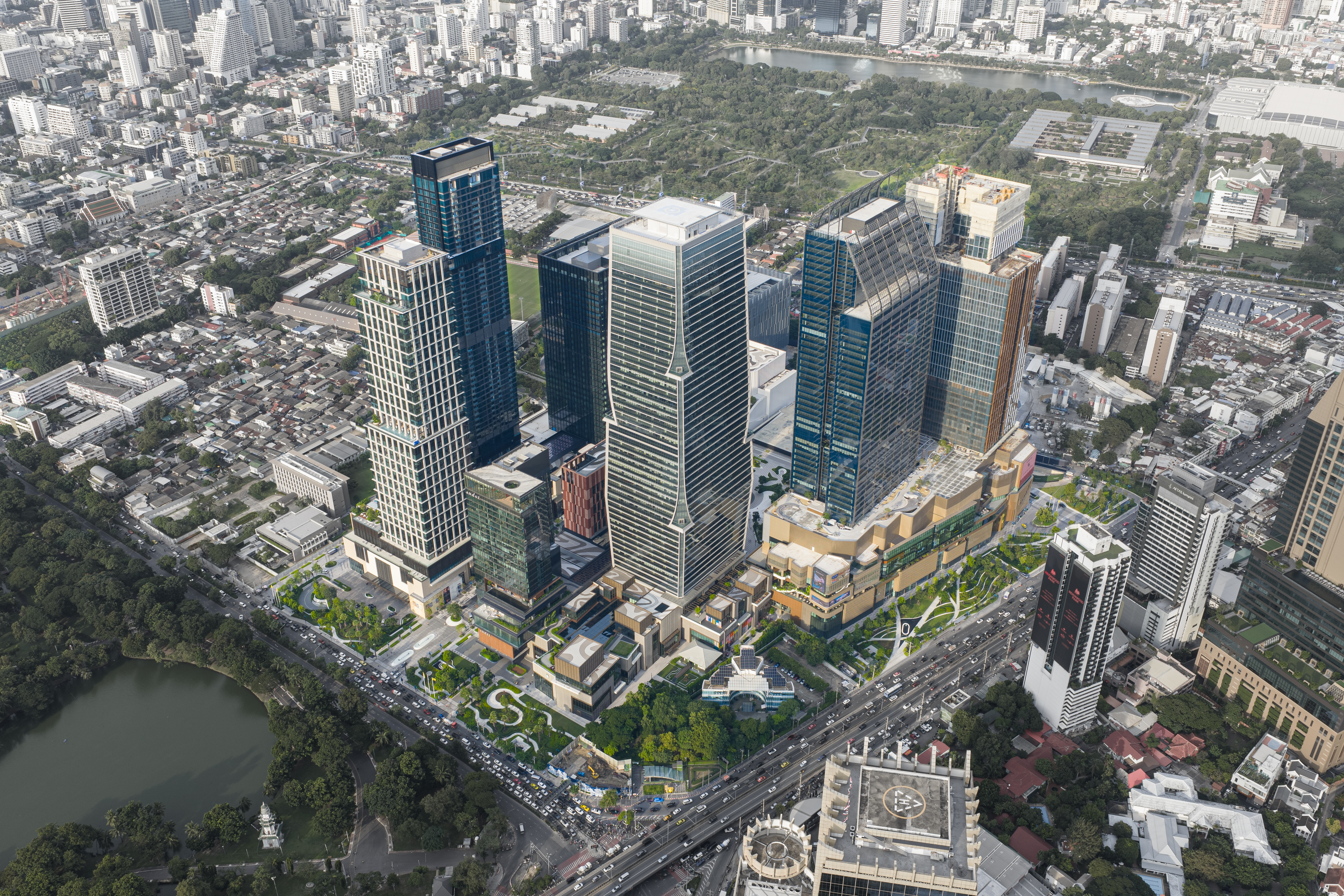
One Bangkok: A Hub for Living in the City of the Future
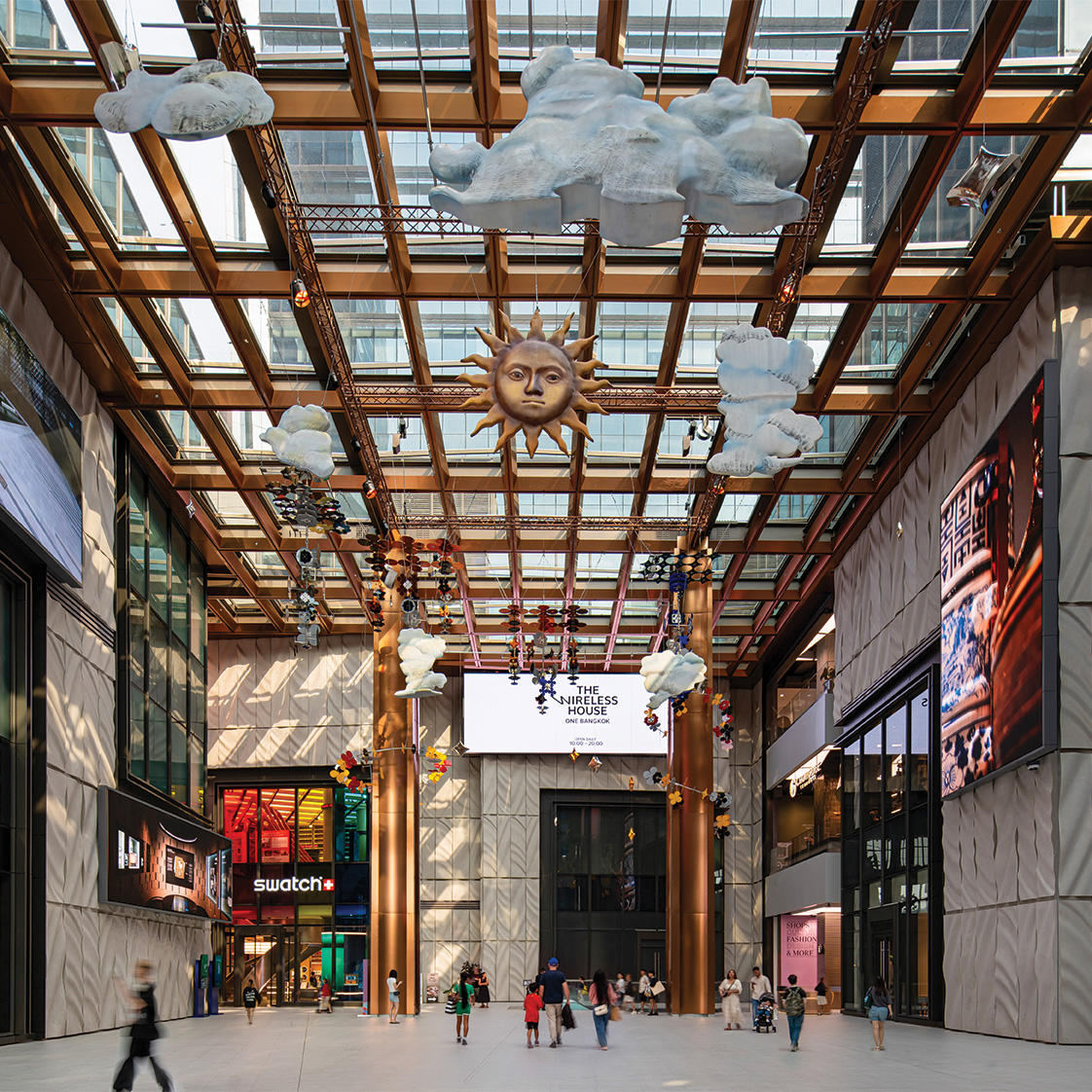
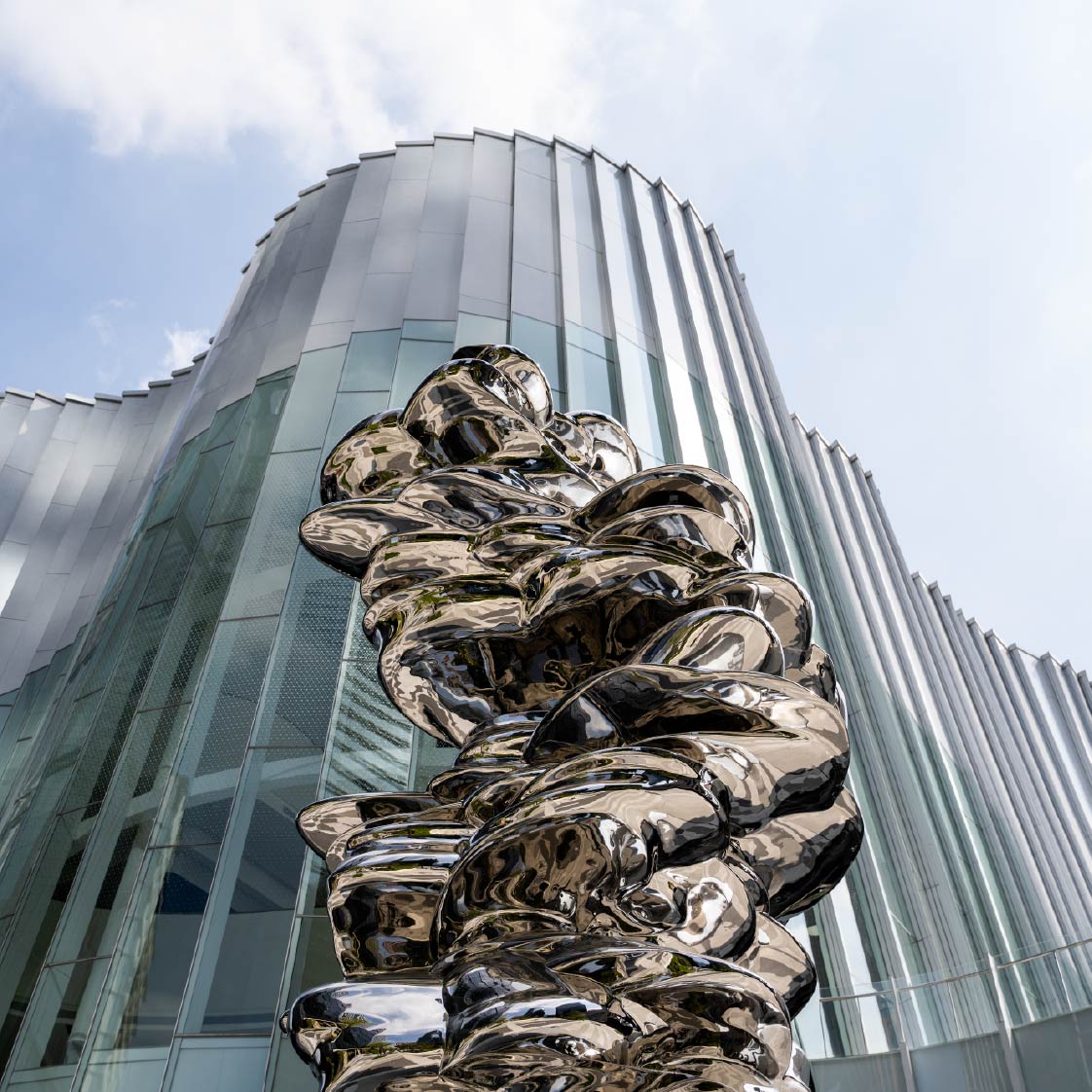
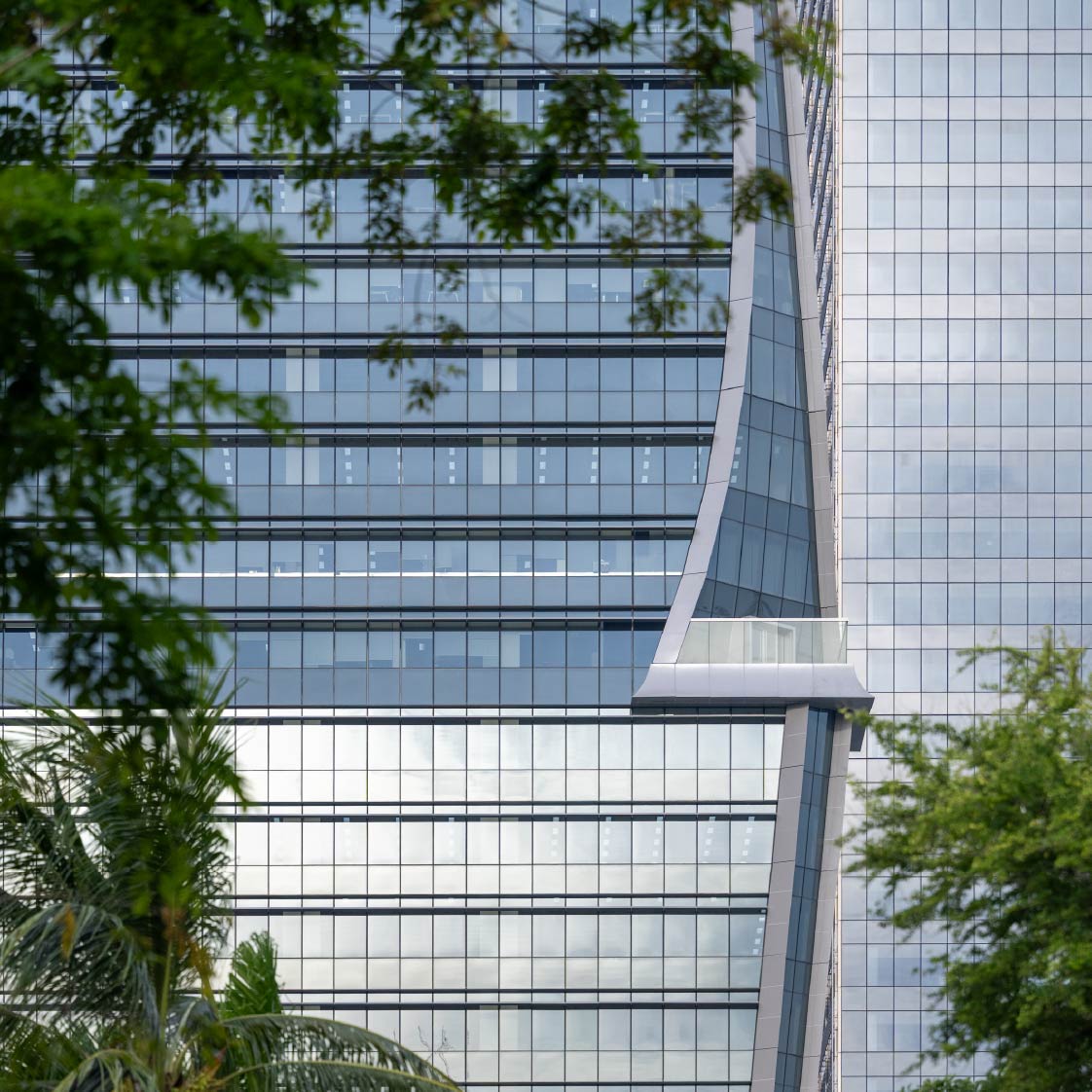
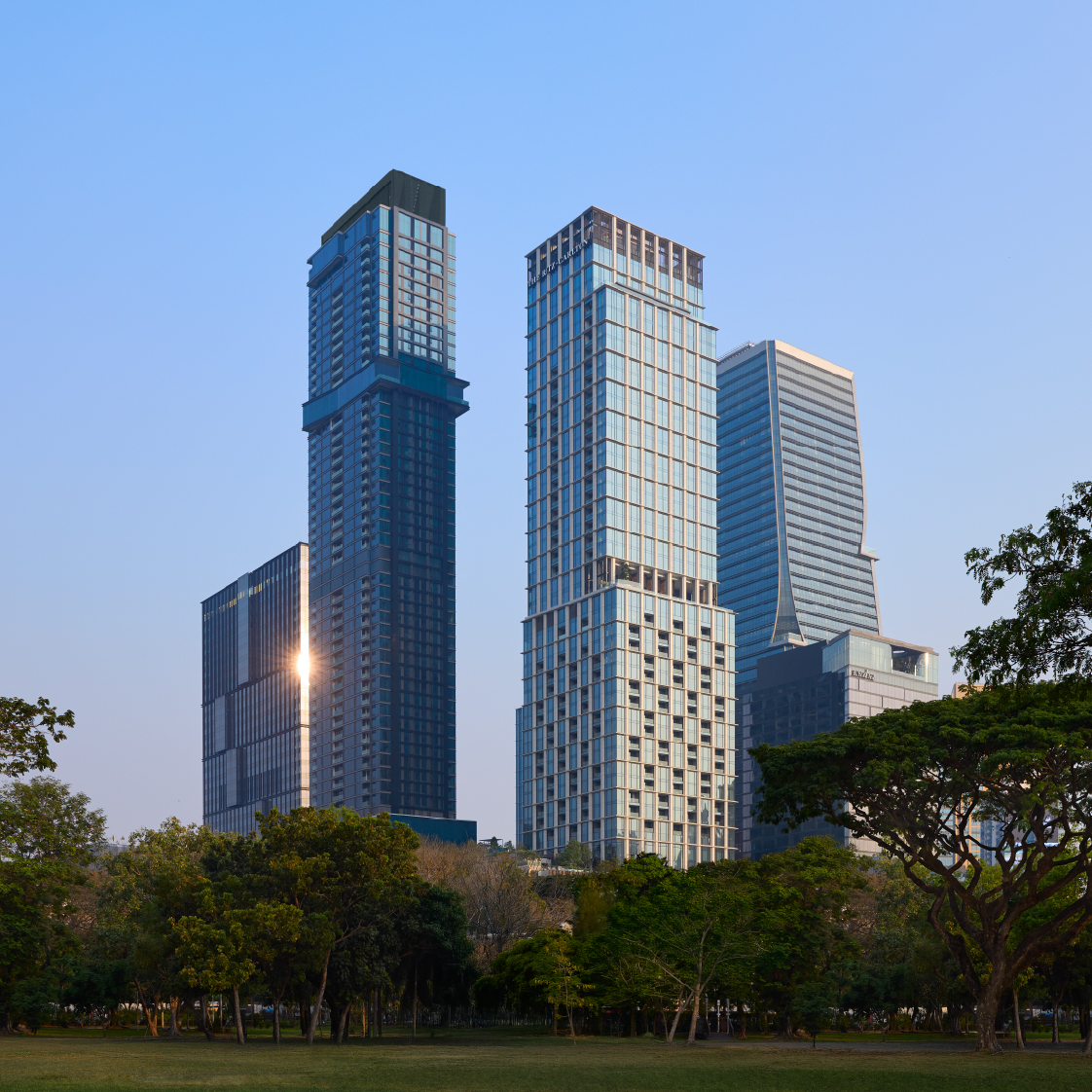
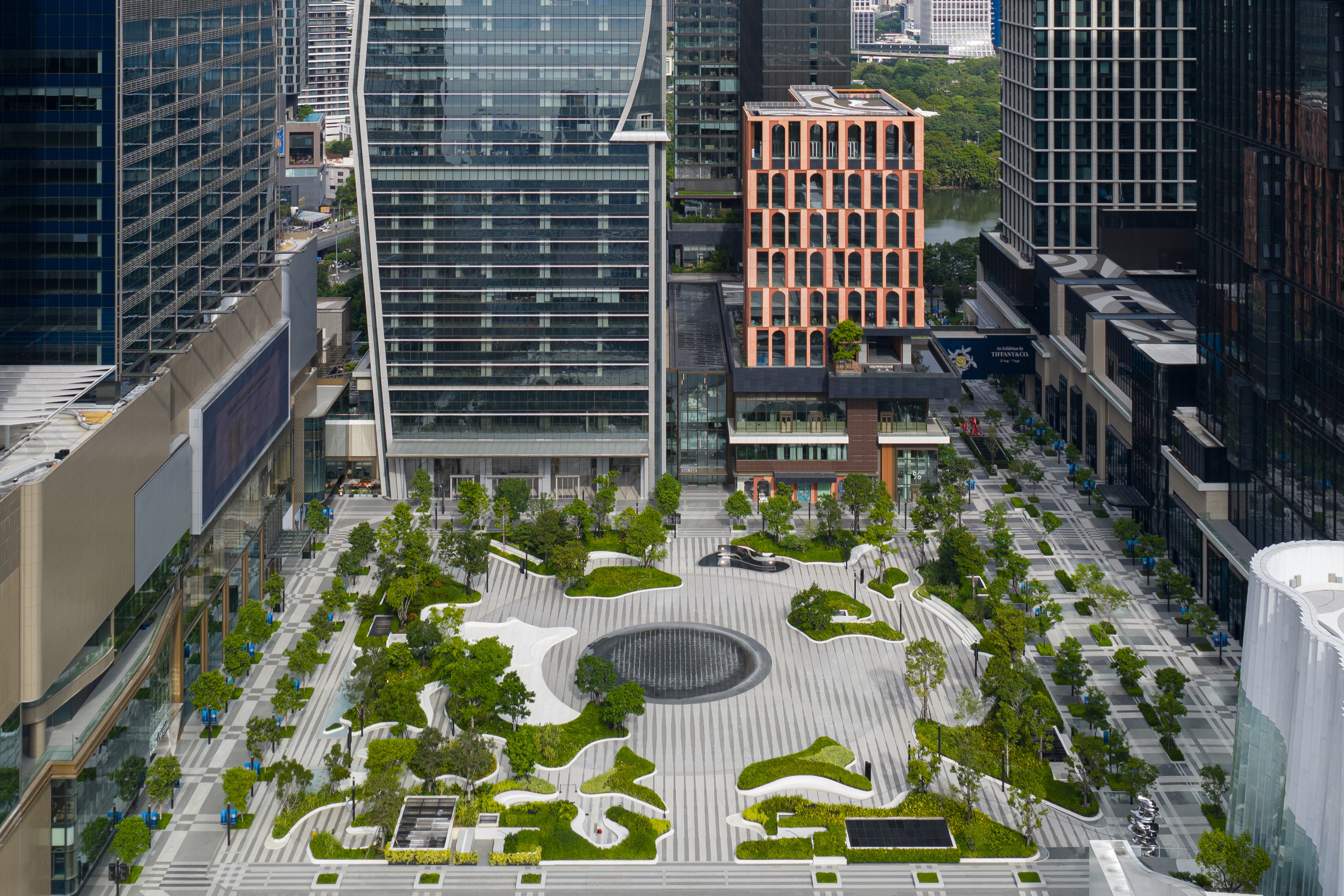
One Bangkok is a perfect prototype for future urban development, combining extensive green spaces, advanced architecture, and smart city technology for sustainability. It not only meets the needs of city dwellers seeking convenience, but also creates an atmosphere that connects people with nature.
Expansive Green Spaces
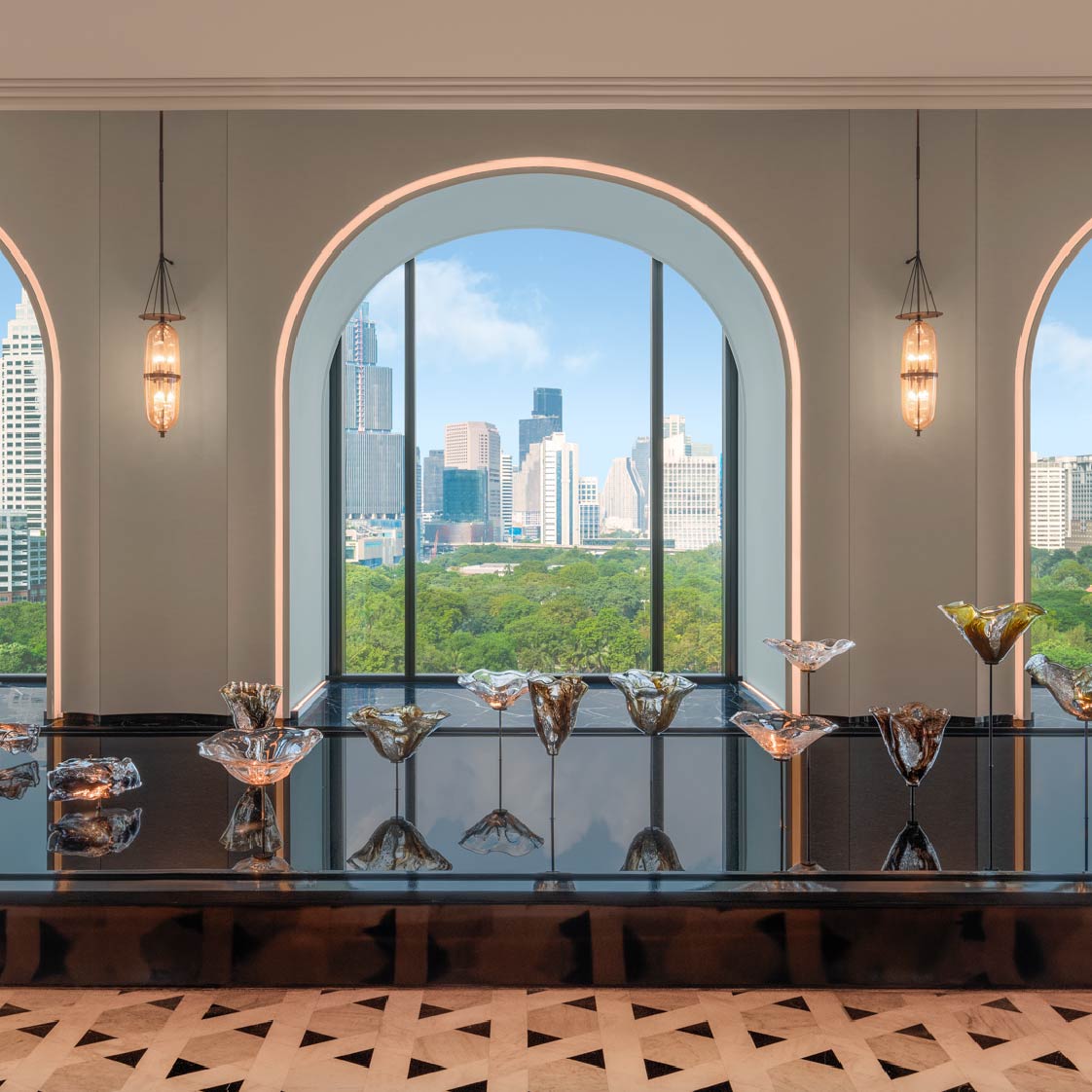
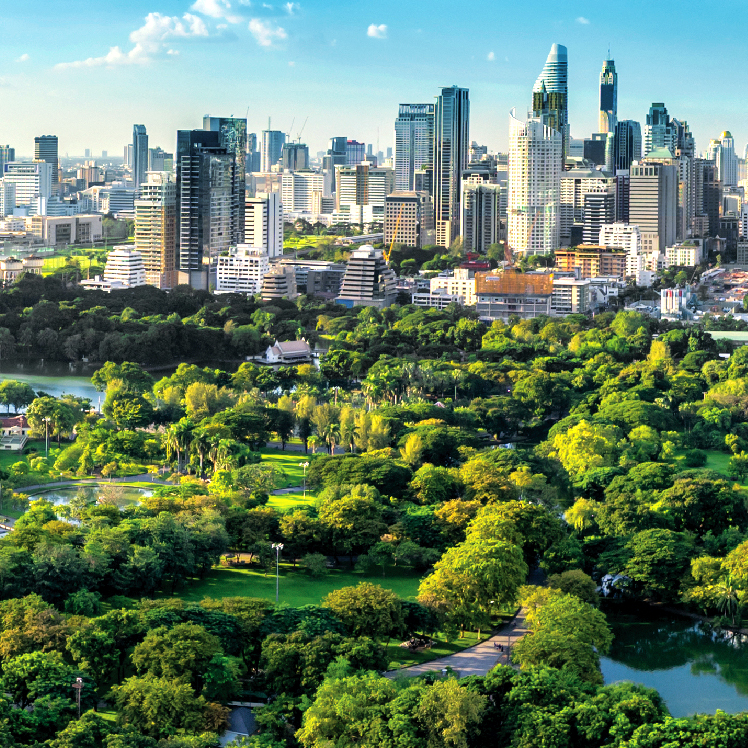
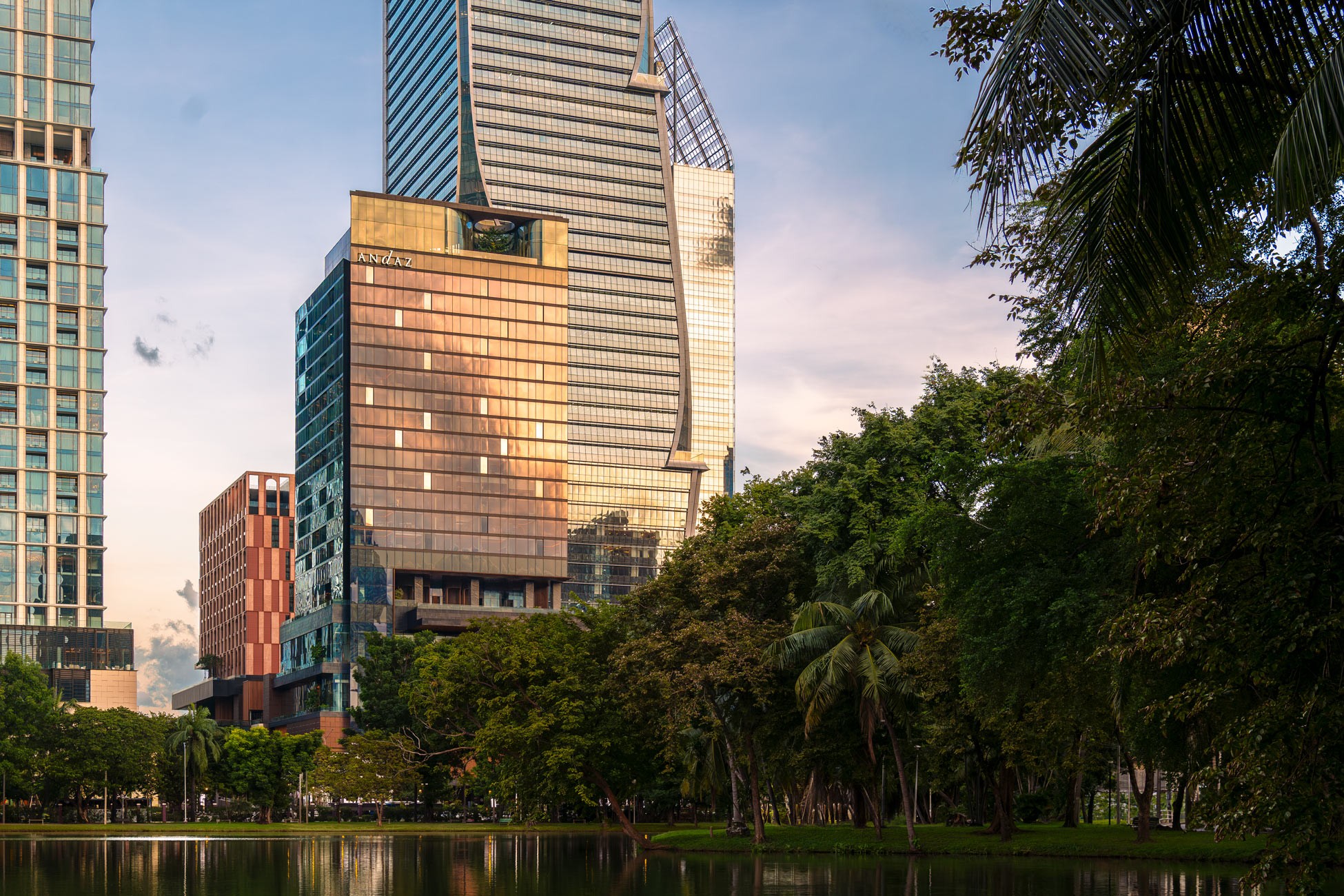
One Bangkok is committed to promoting clean air quality and meaningful open spaces at the heart of the city. With over 50 rai (approx. 20 acres) of green and open areas in central Bangkok, the project connects Lumphini Park and Benjakitti Park, forming a vast green corridor where people can gather, exercise, and enjoy shared experiences in a healthy environment.
Design for Sustainability
All buildings within One Bangkok are certified LEED ND (LEED for Neighbourhood Development) Platinum, a globally recognised sustainability standard across three key areas:
Location and Linkages: Providing convenient travel via MRT, public buses, and an EV Shuttle Service to the BTS station.
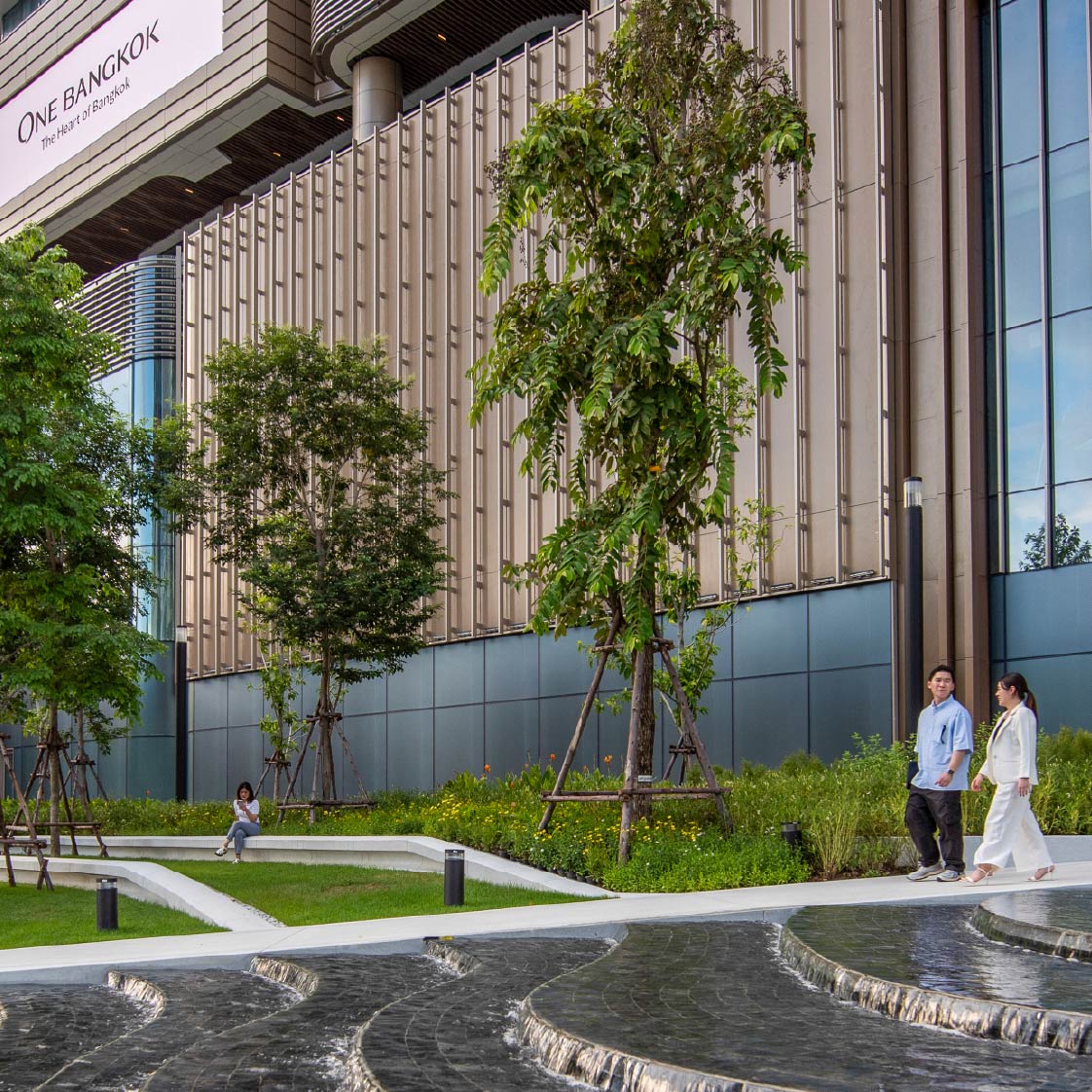
Neighbourhood Pattern and Design: Designing a highly walkable, mixed-use urban area with over 5 kilometres of shaded, comfortable, and universally accessible footpaths.
Green Infrastructure and Buildings: Constructing every building to energy and water efficiency standards, while boosting Green Building performance with a Central Utility Plant and a wastewater treatment system to maximise resource efficiency.
Advanced Smart Technology
One Bangkok is certified by the WiredScore and SmartScore for Neighbourhood standards. WiredScore is a global building certification system that inspects building quality based on its technology infrastructure and digital connectivity. SmartScore is a global building standard that evaluates the building's features in adopting advanced smart technology. This reflects a commitment to providing the best digital connectivity, such as:
High-Performance Digital Connectivity: Installing comprehensive communication networks covering high-speed mobile and Wi-Fi signals, allowing continuous internet access across all areas.
Real-Time Security System: Featuring instant monitoring and data logging, which ensures rapid and efficient response to emergencies.
Smart Traffic System: Implementing a traffic management system that ensures smooth entry and exit from the area, reducing congestion problems.
One Bangkok not only meets the demand for convenience and comprehensive amenities but also creates an environment where people and nature coexist in balance. The vision of the future city is no longer distant. It is already taking shape in the heart of Bangkok.
The smart and sustainable city in One Bangkok is no longer a distant concept; it has materialised in the heart of Bangkok. Explore the One Bangkok smart city project, and experience a living example of a city of the future, where innovation, sustainability, and quality of life converge.
References:
Tag
SHARE

Another Premium Development by





Another Premium Development by