29 Apr 2026
Key Takeaway
Outdoor art serves as more than just a visual rest stop to alleviate the rush of the city; it transforms public spaces into landmarks of memory and communal hubs that bind people together. Immersing oneself in an environment where creativity is deeply woven into the urban fabric, such as at One Bangkok, which hosts a world-class Public Art Collection tailored to its specific locale, allows us to truly indulge in inspiration and discover romance in every heartbeat of city life.
Table of Contents
Amidst the concrete jungle, where skyscrapers stretch as far as the eye can see, the rhythm of life is driven by relentless schedules. In this environment, interactions often occur and fade in a heartbeat. Yet, within the starkness of architectural structures, a certain magic lies hidden, one that can transform a plain plaza into a realm of feeling and a monotonous commute into a romantic interlude. This is the power of outdoor art.
When the Urban Rush Meets Aesthetic Grace
In the digital age, where the world spins at a dizzying speed, city dwellers often live with a finish line constantly in mind. We walk with heads bowed toward smartphone screens, wearing headphones to shut out the surrounding noise, or focusing so intensely on our destination that we rarely notice our environment. Environmental psychology describes this as a state where the urban brain attempts to filter out repetitive stimuli to reduce mental fatigue.
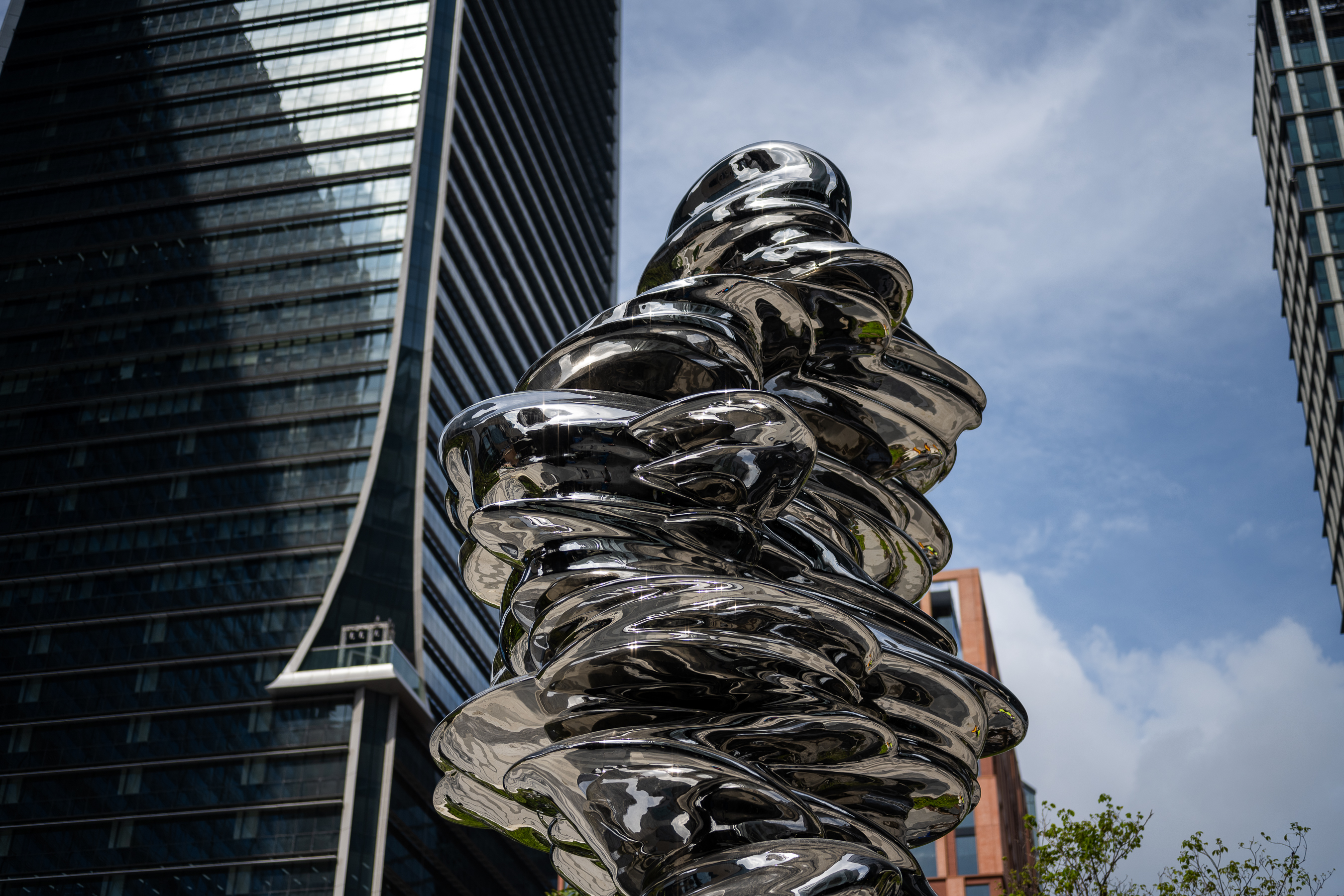
Because of this, the presence of outdoor art, be it a sculpture with an intriguing form, colours that contrast against the grey of high-rises, or installation art designed to play with the dimensions of space, acts as a ‘beautiful interrupter’. It draws our eyes away from the screen and encourages us to slow our hurried footsteps.
When our gaze catches these works, they act like a ‘comma’ in the long, rambling sentence of life. They create a space for a pause, allowing us to catch our breath and indulge in aesthetics for just a moment before moving on with a more relaxed stride.
From Map Coordinates to Landmarks of Memory
From an urban sociology perspective, a ‘space’ is merely a geographical coordinate on a map until people inhabit it and create memories. Good urban design is not merely about building beautiful roads or towers; it is about creating meaningful places. In this context, public art acts as an emotional architect, fostering a sense of belonging and connection at the very heart of urban placemaking.
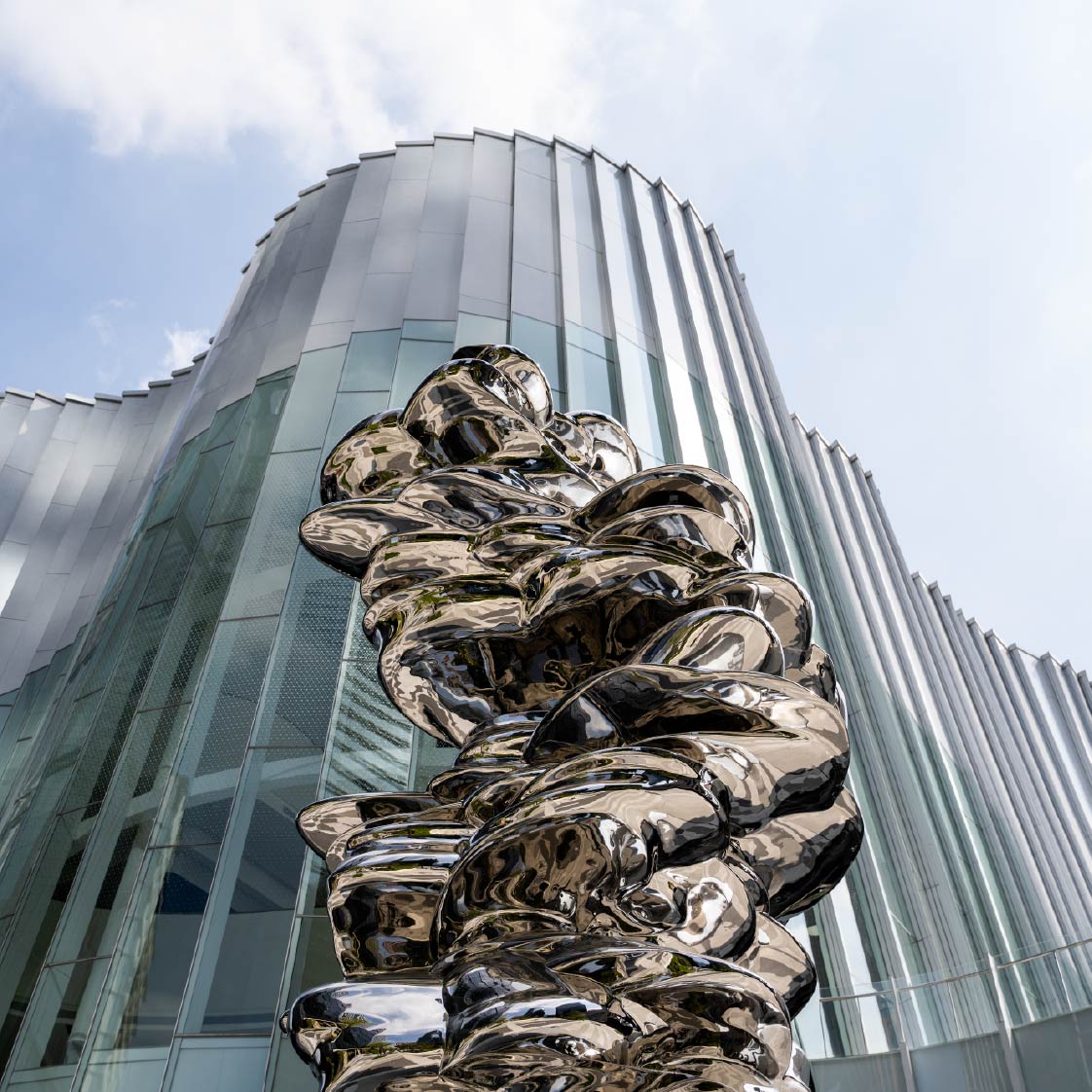
Furthermore, unique art pieces transform open voids into ‘places of memory’. You might find yourself arranging to meet a close friend or a first date by saying, “Meet me at the red statue,” or “I’ll be waiting under the steel structure that reflects the city lights.”
In this way, art becomes a witness to the significant milestones in people's lives. It is a conversation starter, a backdrop for joyful photographs, and as time passes, the artwork absorbs the collective memories of the community. This gives the city an identity, a narrative, and a romance that is truly tangible.
Creating Small Shared Spaces in a Grand Metropolis
Art breaks down the barriers between humans. It requires no grammar and knows no bounds of race or language. When two people stand before the same abstract sculpture, they let their imaginations roam. Even if no words are spoken, standing side-by-side, observing the same object, and sharing a common emotional state constitute a small romantic moment against the backdrop of the metropolis.
Alternatively, art can be the catalyst for meeting a stranger. A conversation that forms naturally, a smile shared when walking through a photography tunnel, or even offering to take a photo for a tourist, are all evidence that art does not just create beauty; it seamlessly weaves the feelings of strangers together.
Dimensions of Time: Light and Shadow Throughout the Day
The distinct charm of a public art collection in an urban setting is its dynamism. While art in a gallery might be controlled by static artificial lighting, art in the public realm stands defiant against the wind, the sun, and the seasons. The same piece can evoke entirely different emotions depending on the dimensions of time, light, and shadow, as if the stage changes with the rhythm of the day.
Reduce the Pace and Discover Romance at One Bangkok
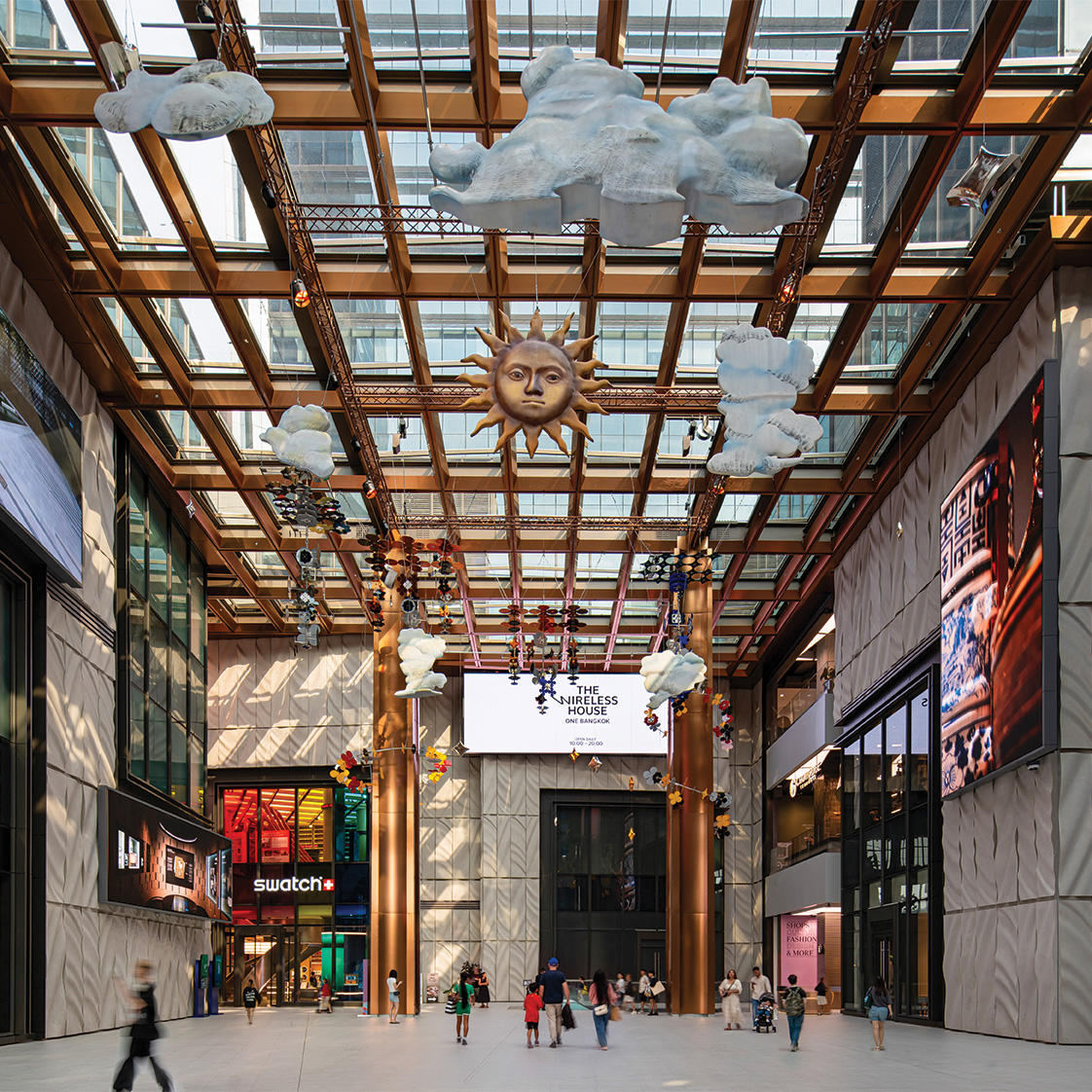
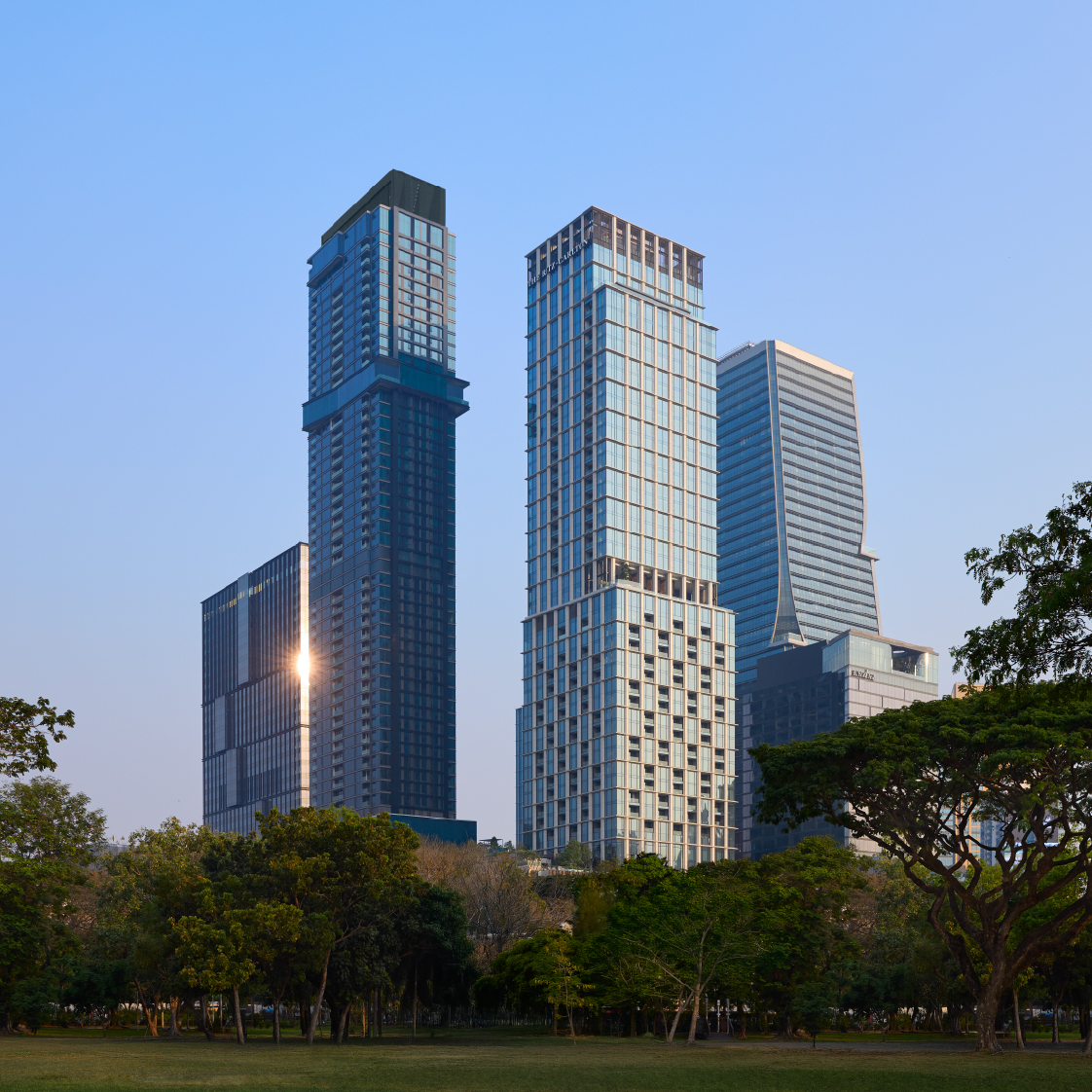
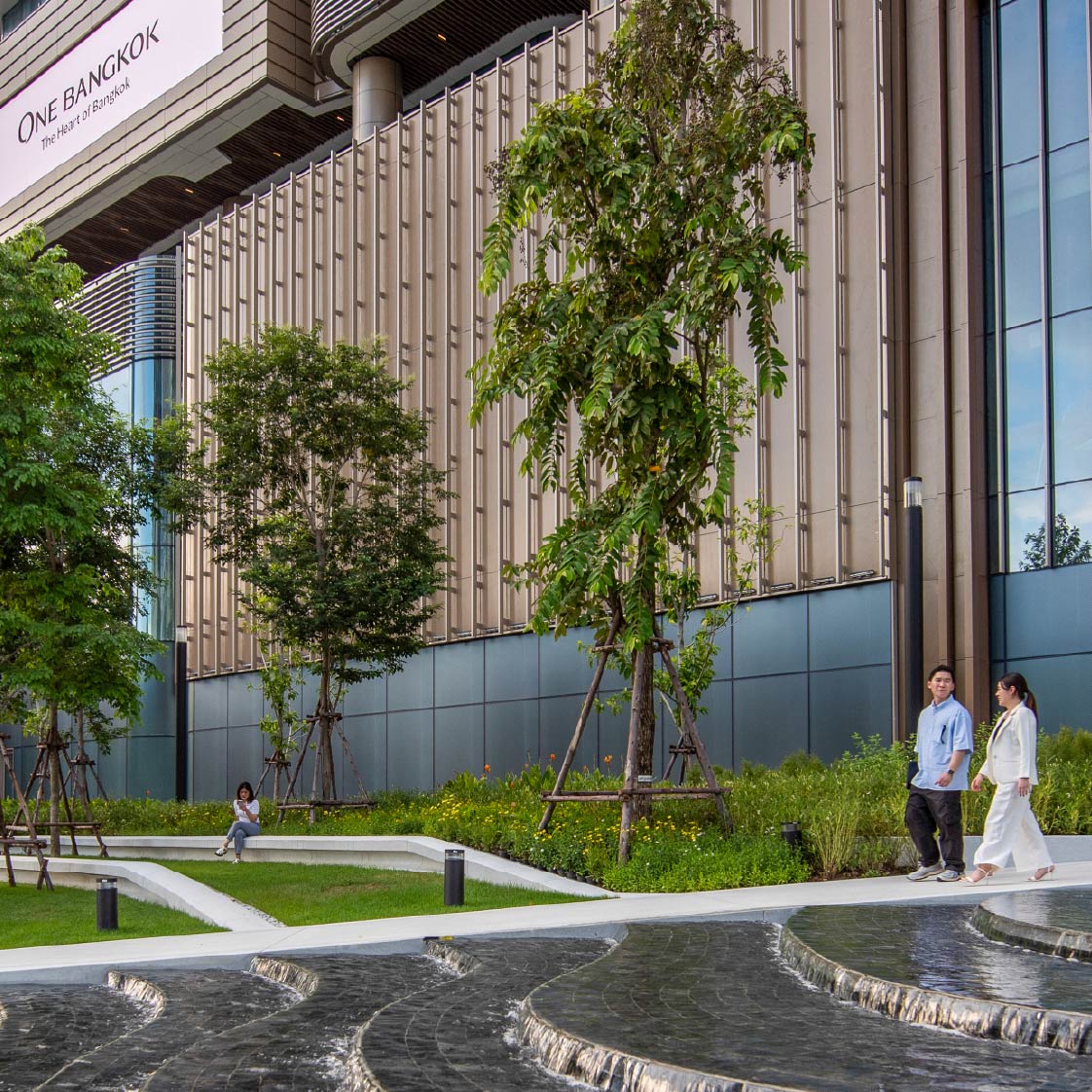
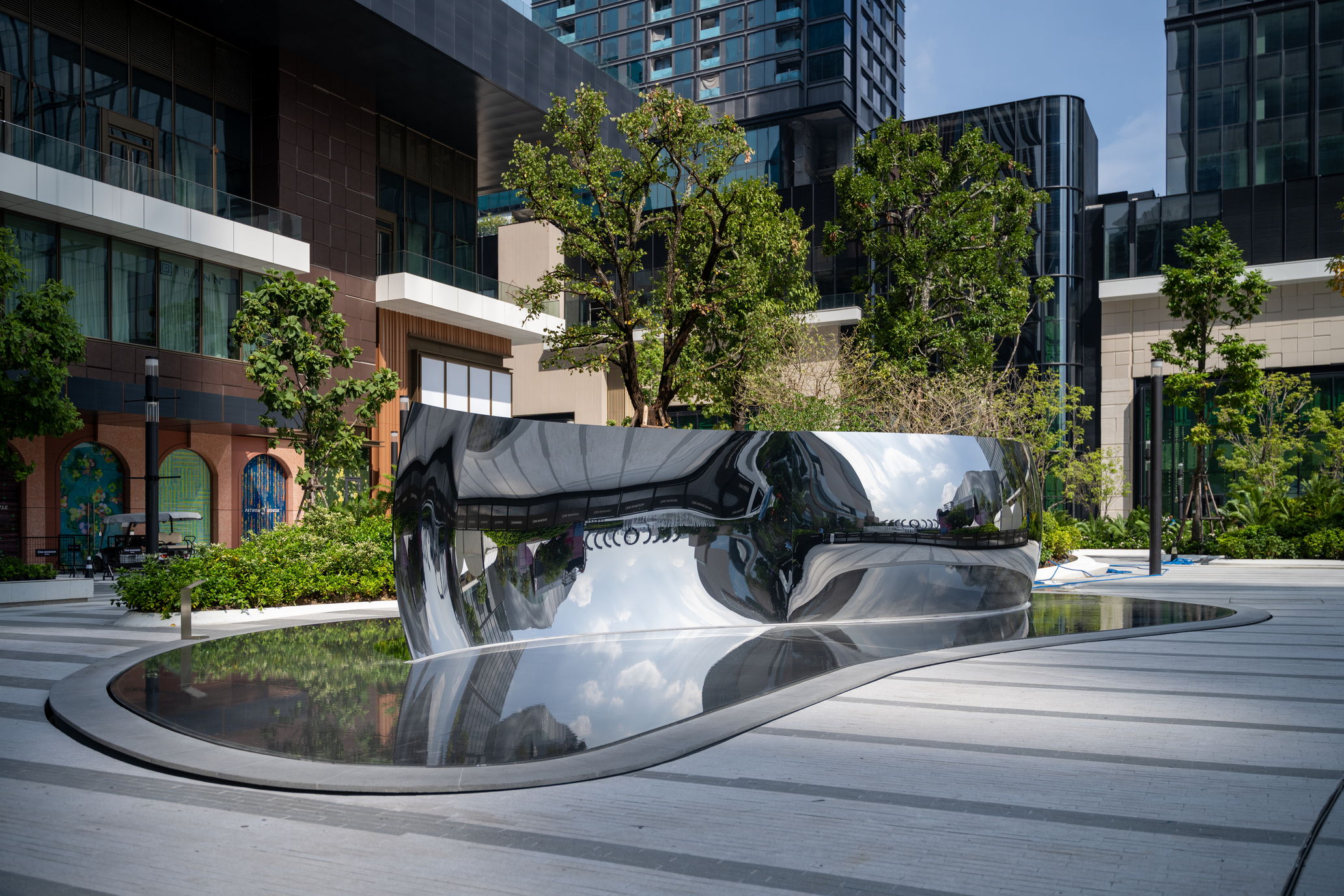
Transform your hurried moments in the metropolis into romantic memories, starting at One Bangkok. By opening the ‘Art Loop', a path spanning over 2 kilometres, the city is given a permanent space for public art. This initiative gathers works from world-class artists such as Anish Kapoor and Tony Cragg, alongside local talents like Alex Face. Every piece has been meticulously conceived and curated to harmonise with the local context, offering everyone the chance to stroll, absorb inspiration, and spend quality time with someone special in an elevated atmosphere.
If you are looking for a new landmark that blends art with urban living, come and explore the Art Exhibition One Bangkok.
Frequently Asked Questions about public art and urban spaces (FAQs)
Q: Can outdoor art really help reduce urban stress?
A: Yes, it certainly can. According to the Attention Restoration Theory in environmental psychology, the human brain often suffers from fatigue due to intense focus on work or the chaos of city life. Resting your eyes on art with organic shapes or unusual colours triggers the brain's relaxation mechanisms, helping to lower stress and restore concentration.
Q: Why are many pieces of public art so large or made with reflective materials?
A: Designing art on a large scale is often a response to the proportions of skyscrapers, ensuring the piece isn't swallowed by its surroundings. Meanwhile, the use of stainless steel or reflective surfaces is a deliberate choice by artists to pull the surrounding context, the movement of people, the sky, and city lights into the work itself, making the art feel alive and ever-changing with the pulse of the city.
Q: Is it necessary for everyone to interpret public art in the same way?
A: Not at all. The greatest charm of public art is that it is open-ended. Artists often design abstract works or shapes that challenge the imagination, leaving space for viewers to use their own personal experiences complete the meaning. It is this diversity in interpretation that sparks conversation and the exchange of perspectives, making urban society even more vibrant.
Q: Where can we see world-class public art in Bangkok?
A: Currently, Bangkok has a prominent space for such displays at One Bangkok. The project has created the ‘Art Loop’, a 2-kilometre trail throughout the development. It features permanent installations by world-renowned artists like Anish Kapoor and Tony Cragg, as well as leading Thai street artist Alex Face, all of which are free for the public to enjoy.
Tag
SHARE

Another Premium Development by





Another Premium Development by