05 Nov 2026
Key Takeaways
Bangkok faces increasing flood risks due to a combination of factors, including its low-lying topography, ongoing land subsidence, upstream water inflows, rising sea levels, and intense localized rainfall. Addressing these challenges requires more than the construction of flood barriers. It also demands resilient urban planning guided by Water-Positive, Flood-Resilient Design, and Sponge City principles, which help absorb, retain, and manage stormwater at its source.
These strategies should be integrated with comprehensive drainage and flood management systems that incorporate water retention areas, high-capacity drainage infrastructure capable of handling heavy rainfall, and water recycling solutions. Together, these measures help enhance urban resilience, reduce flood risks, and support the long-term sustainability of cities.
Table of Contents
The growth of major cities around the world brings increasing challenges related to resource management and environmental sustainability, particularly when it comes to water. These challenges are being intensified by the impacts of global boiling, which have left many cities facing both prolonged droughts and sudden flooding. To address this growing uncertainty, urban development is evolving beyond traditional flood prevention measures toward more adaptive and nature-based solutions through Water-Positive and Flood-Resilient Design principles.
What Is Water-Positive?
Water-Positive refers to an advanced approach to water management that goes beyond water conservation. Rather than simply reducing water consumption, its goal is to create systems that enable a project or organization to return more clean water to nature and local communities than it consumes.
The key distinction lies in its broader impact. Traditional water conservation focuses on minimizing water use and reducing wastewater discharge. A Water-Positive approach, however, includes initiatives such as rainwater harvesting, wastewater treatment and reuse, and the restoration of local water resources. Treated water can be recycled for non-potable purposes such as cooling systems and landscape irrigation, creating a positive contribution to the overall ecosystem.
Flood-Resilient Design: Why Does Bangkok Need a More Adaptive Approach to Flooding?
Bangkok is located on a low-lying river delta and faces multiple flood-related challenges, including land subsidence, upstream water inflows, rising sea levels, and increasingly unpredictable episodes of intense rainfall.
Flood-Resilient Design represents a shift in perspective. Instead of relying solely on increasingly higher flood barriers, which could eventually be overwhelmed, this approach acknowledges that flooding is an inevitable part of urban life. The focus is on designing cities that can accommodate, absorb, store, and safely channel water while ensuring that critical infrastructure and daily activities continue to function. When disruptions occur, communities will be able to recover and return to normal operations as quickly as possible.
Sponge City: Transforming Cities into Water-Absorbing Environments
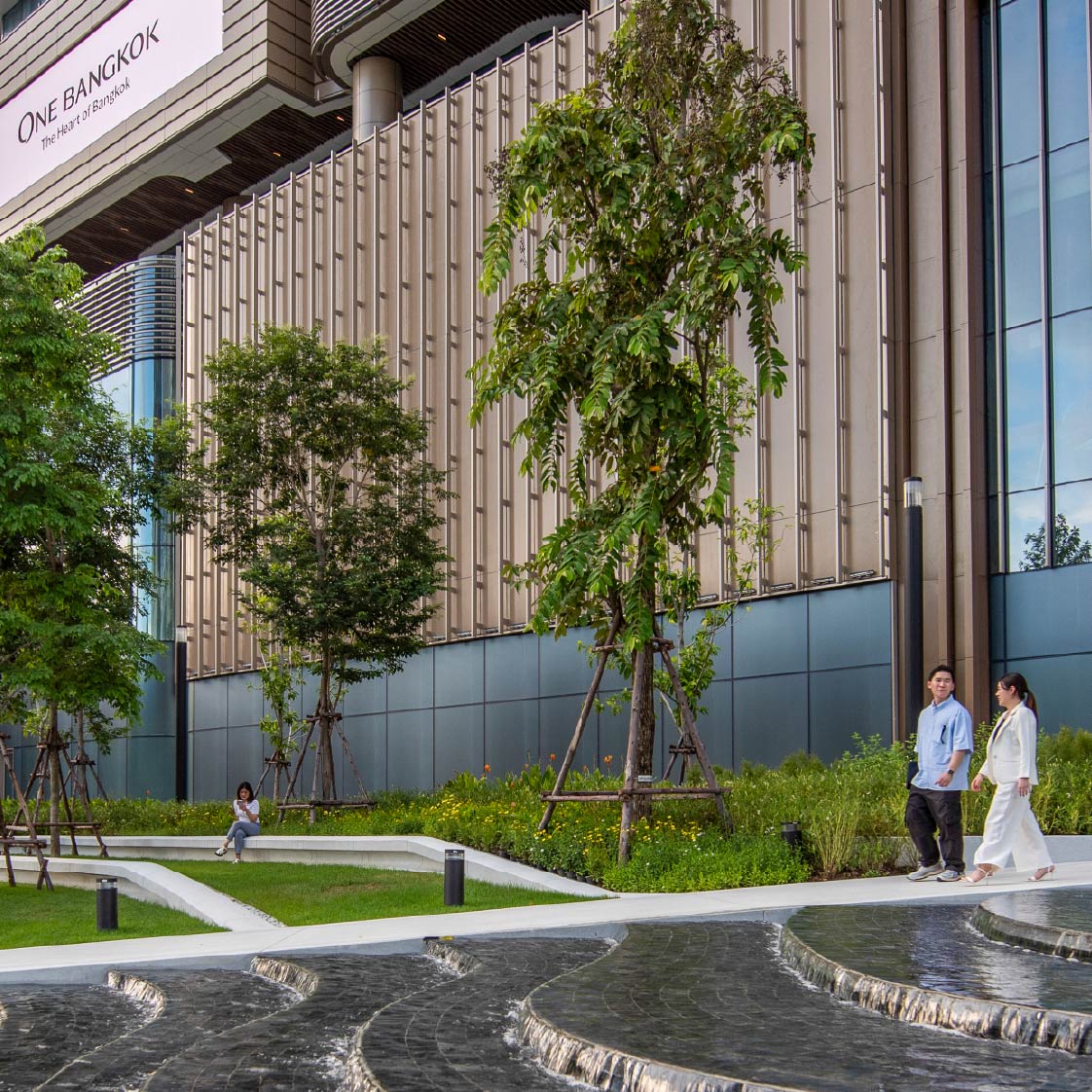
One of the key strategies within Flood-Resilient Design is the Sponge City concept. Under this approach, urban infrastructure is designed to function like a giant sponge, absorbing and storing rainwater rather than allowing it to rapidly run off hard surfaces and overwhelm drainage systems.
Key Sponge City components include:
• Permeable Surfaces
Using paving materials that allow rainwater to infiltrate the soil beneath helps reduce surface runoff and improves natural groundwater recharge.
• Green Infrastructure
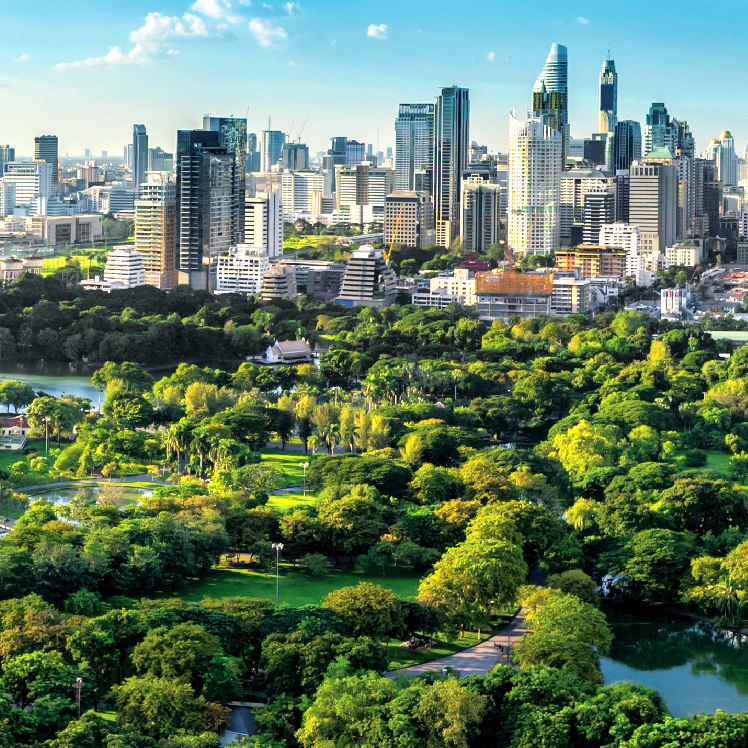
Trees, vegetation, parks, and urban forests help retain moisture, slow stormwater flow, and improve overall environmental quality.
• Retention Ponds and Water Storage Areas
Parks, open spaces, and public plazas can be designed at lower elevations to temporarily store excess rainwater during heavy storms, reducing pressure on urban drainage networks.
This concept has already been successfully implemented in several global cities. Examples include Wuhan and Shenzhen in China, where urban landscapes have been redesigned to absorb substantial volumes of rainwater, and Rotterdam in the Netherlands, where innovative Water Plazas function as recreational and sports spaces during normal conditions but transform into temporary water retention basins during heavy rainfall to mitigate urban flooding.
Key Components of Effective Drainage and Flood Prevention Systems in Bangkok
To strengthen resilience against flooding, large-scale developments and urban infrastructure should incorporate three key elements:
• Retention Areas
Underground water storage tanks and green spaces help detain stormwater before it enters the public drainage network, reducing peak runoff and lowering the risk of drainage system overflows.
• High-Capacity Drainage Systems
Drainage pipes, channels, and pumping systems should be designed based on projected maximum rainfall intensities and future climate variability to ensure sufficient capacity during extreme weather events.
• Water Recycling Systems
Captured rainwater and treated wastewater can be reused for non-potable applications, such as landscape irrigation and toilet flushing, reducing demand on municipal water supplies and improving water efficiency.
Sustainable Water and Resource Management at One Bangkok
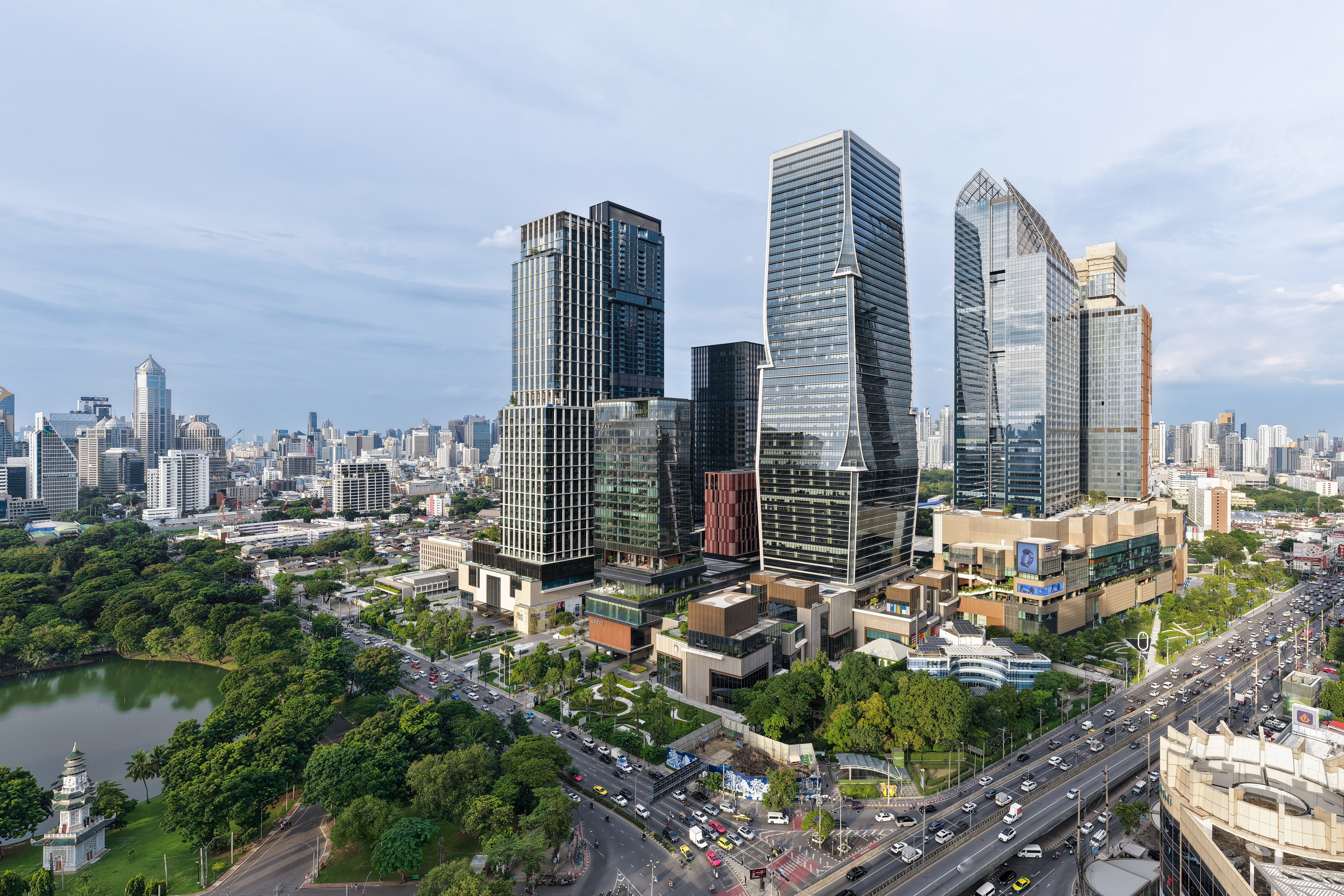
One Bangkok integrates sustainable development principles into the management and operation of the project to reduce environmental impacts and enhance long-term climate resilience.
Water Management Within the Development
The project utilizes rainwater harvesting systems and a centralized wastewater treatment facility. Treated water is recycled for toilet flushing, landscape irrigation throughout the development, and building cooling systems, significantly reducing reliance on municipal water supplies.
Resource Management
One Bangkok employs a centralized infrastructure system that leverages smart technologies to optimize the distribution and use of water and energy. This integrated approach improves operational efficiency while minimizing resource losses.
Resilient Design
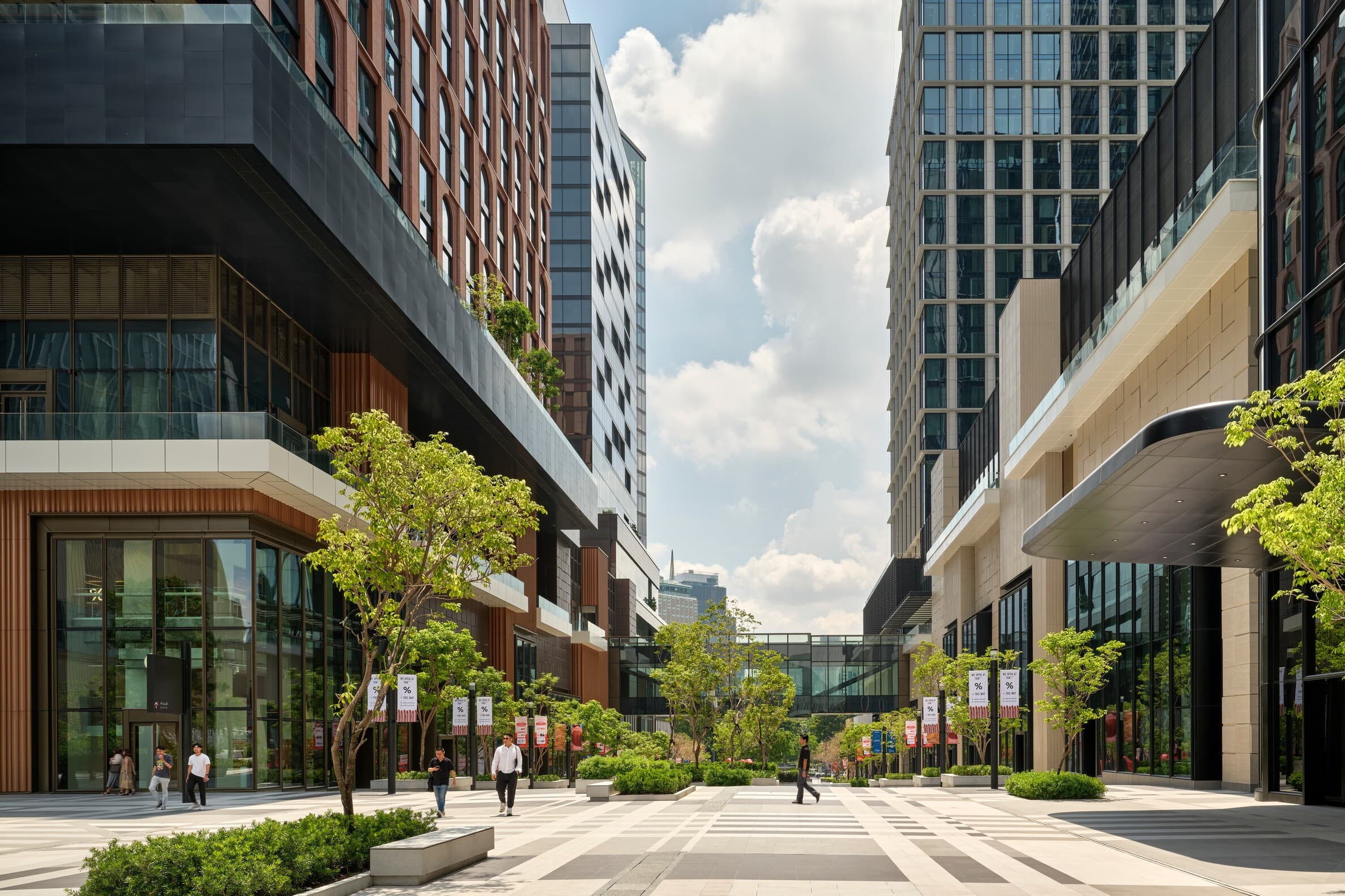
The project's green spaces are designed in line with Sponge City principles, helping to naturally slow, absorb, and retain rainwater. In addition, critical building engineering systems are elevated above the projected 500-year flood level, ensuring that essential operations can continue during extreme weather events and enabling a faster recovery following disruptions.
Designing cities that can coexist with water, while managing resources responsibly, is essential to building resilience in an increasingly uncertain future. Through effective policies, innovative technologies, and integrated action, cities can better adapt to environmental challenges and create more sustainable urban environments for generations to come.
Discover Sustainable Urban Development at SX2026
Explore innovative approaches to sustainable urban development and environmental stewardship by Frasers Property at Sustainability Expo 2026 (SX2026), located at the Better Community Zone, Hall 4, Ground Floor, Queen Sirikit National Convention Center (QSNCC), from 6 - 15 November 2026, between 10.00 – 20.00 hrs.
You can also learn more about One Bangkok's vision for sustainable city development by visiting our website.
Frequently Asked Questions About Sustainable Water Management (FAQs)
Q: What is Water-Positive, and how is it different from traditional water conservation?
A: Water-Positive is an approach that aims to return more clean water to nature and local communities than is consumed. Unlike traditional water conservation, which focuses on reducing water use and minimizing wastewater, the Water-Positive approach also includes creating additional water resources through rainwater harvesting, wastewater treatment and reuse, and the restoration of local water sources to generate a positive impact on the broader ecosystem.
Q: What is a Sponge City?
A: A Sponge City is an urban planning and infrastructure concept designed to enable cities to absorb, retain, and naturally manage rainwater like a sponge. This is achieved through permeable surfaces, green infrastructure, and water retention areas, which help reduce surface runoff, alleviate pressure on drainage systems, and lower flood risks.
Q: What are the key components of an effective drainage and flood prevention system?
A: An effective system should consist of three main elements:
Q: How does One Bangkok manage water to support a more sustainable city?
A: One Bangkok incorporates rainwater harvesting and a centralized wastewater treatment system to recycle treated water for landscape irrigation and building cooling operations. The development's green spaces are designed in accordance with Sponge City principles to help absorb and retain rainwater naturally. In addition, critical engineering systems are elevated above historically recorded peak flood levels to enhance resilience and ensure operational continuity during extreme weather events.
Tag
SHARE

Another Premium Development by





Another Premium Development by