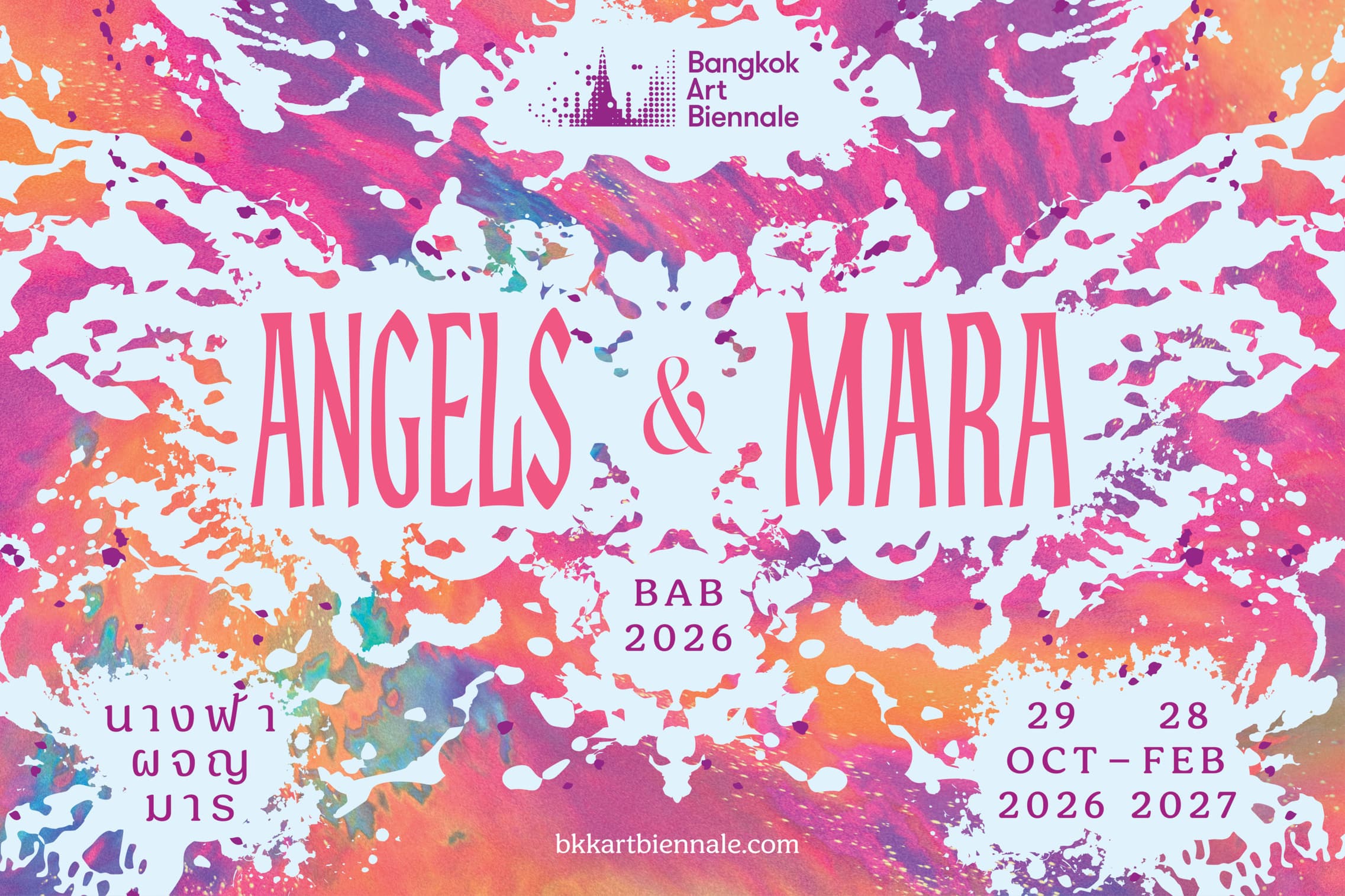
Bangkok Art Biennale 2026 ANGELS & MARA | 29 October 2026 – 28 February 2027 | 72 participating artists and collectives
Bangkok Art Biennale (BAB) announces the complete line-up of 72 participating artists and collectives for its fifth edition, ANGELS & MARA. Building on its earlier artist announcements, BAB 2026 brings together practices spanning painting, sculpture, photography, moving image, textile, installation and performance, exploring the forces that pull contemporary life between desire and restraint, destruction and renewal, the sacred and the everyday. Running from 29 October 2026 to 28 February 2027, the Biennale continues its distinctive model of placing contemporary art within Bangkok itself, creating encounters between artworks and spaces charged with their own histories, beliefs and communities.

29 October 2026
to 28 February 2027

10.00 - 20.00 hrs.

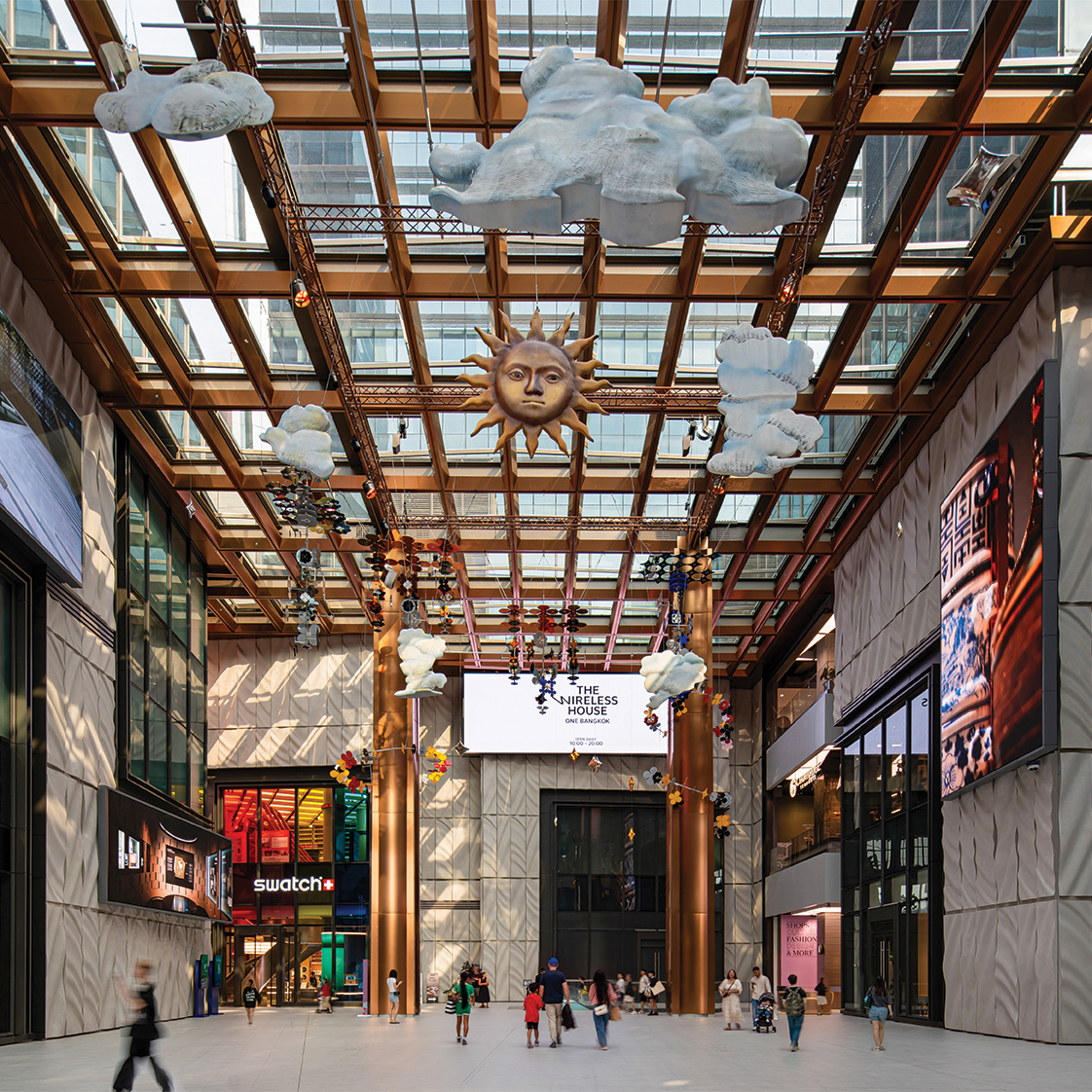
One Bangkok
This year, the programme expands further with Alliance Française Bangkok joining the Biennale's venues, alongside Wat Arun, Wat Pho, Wat Prayoon, National Museum Bangkok, Art Centre Silpakorn University, Museum Siam, Bangkok Art and Culture Centre (BACC), One Bangkok, centralwOrld, and Siam Paragon. The 11 venues bring together sacred temples, national collections, educational institutions and commercial districts, positioning the city itself as an active context for the exhibition. Together, these venues embody the Biennale's vision of bringing contemporary art into conversation with Bangkok's rich cultural landscape. By connecting sacred temples, national collections, educational institutions and vibrant commercial districts, BAB 2026 encourages visitors to experience the city through new perspectives, where history, spirituality and contemporary artistic practice intersect.
From porcelain and bronze to tattoos, dreams and discarded pickleballs
Rather than approaching ANGELS & MARA as a simple opposition between good and evil, participating artists expose the unstable territory between the two. At Wat Pho, Japanese-Swiss artist Leiko Ikemura connects mortality, rebirth and Buddhist iconography through Memento Mori, a reclining bronze figure whose pose recalls both European funerary sculpture and the temple's monumental Reclining Buddha. Nearby, Wu-san and Ma-san — “Angel from Cologne” and “Devil from Cologne” — embody opposing forces that ultimately belong to the same world. At the National Museum Bangkok, Chinese artist Liu Jianhua creates Square (Siamese Triangle), a site-specific configuration of steel and glazed porcelain in the Throne Hall. Its molten-gold-like porcelain fragments reflect the hall's vermilion ceiling and evoke centuries of ceramic exchange between China and Siam, including the histories of benjarong and lai nam thong. Elsewhere, Thai performance and tattoo artist Chomphunut Phuttha turns the body itself into a site of resistance. In the durational work WOMARA, she tattoos consenting participants with reversed texts drawn from traditional didactic proverbs for women, confronting the gendered histories of tattooing and transforming inscription into an assertion of bodily agency. Vietnamese artist Le Hien Minh moves through another kind of image-world. Lotusthetics rapidly collages hundreds of images from cinema, news, archives, celebrity culture and spiritual iconography, destabilising their original meanings while confronting representations of Asian women shaped by Orientalism, colonialism and ornamental stereotypes. For Thai textile artist Ploenchan Vinyaratn, transformation begins with what has already been discarded. Vestibule is a woven passage constructed from surplus yarns, fabric scraps, cardboard and even broken pickleballs. Visitors enter one at a time, moving through a physical threshold in which materials — and potentially identities — are given another life. One may enter as Mara and emerge otherwise, or the reverse. Hmong artist Tcheu Siong gives material form to another invisible realm through hand-stitched embroidery and reverse appliqué. Emerging from dreams and visions, her figures evoke spirits, gods, ghosts, memory and Hmong cosmology, bringing the unseen into physical presence through fabric and thread. Nepalese performance artist Amrit Karki, meanwhile, examines the tension between stillness and worldly ambition in A Fallen Petal Floating on the River of Time. Through the body, water and the image of the bed as a place of rest and renewal, the participatory performance asks what prevents us from surrendering to the flow of time. These works sit alongside practices by artists including AES+F, Nobuyoshi Araki, Arahmaiani, Mel Chin, Amanda Coogan, Mandy El-Sayegh, Max Hooper Schneider, Yasumasa Morimura, Sun Yuan & Peng Yu, Bill Viola, Sin Wai Kin, Apulu Pati Tyrell, Udom Taephanich, Yanran Chen, Yuan Goang-Ming, Woo Hannah, Renato Leotta, Htein Lin, Sakarin Krue-On, Tawan Wattuya and many others, bringing together generations and perspectives from across Asia and beyond.
Beyond the Biennale: BAB Plus and BAB Fringe
For 2026, ANGELS & MARA extends beyond BAB's official venues through BAB Plus and BAB Fringe, two collaboration programmes connecting the Biennale with the wider contemporary art ecosystem beyond Bangkok. BAB Plus brings together One Bangkok Art & Culture Space, 100 Tonson Foundation, BANGKOK CITYCITY GALLERY, DIB 26 and Jim Thompson Art Center, each developing its own exhibition during the Biennale period in dialogue with ANGELS & MARA. BAB Fringe expands the constellation further through collaborations with Rongsi 1984+1 Gallery, HELU-TRANS (THAILAND) and Warin Lab Nomad, creating another layer of independently produced exhibitions taking place alongside BAB 2026. Together, Bangkok Art Biennale, BAB Plus and BAB Fringe position Bangkok not simply as the host of a biennale, but as a city in which multiple exhibitions, institutions and independent spaces can respond simultaneously to a shared question: where, in contemporary life, does the angel end and Mara begin?
Tag
SHARE
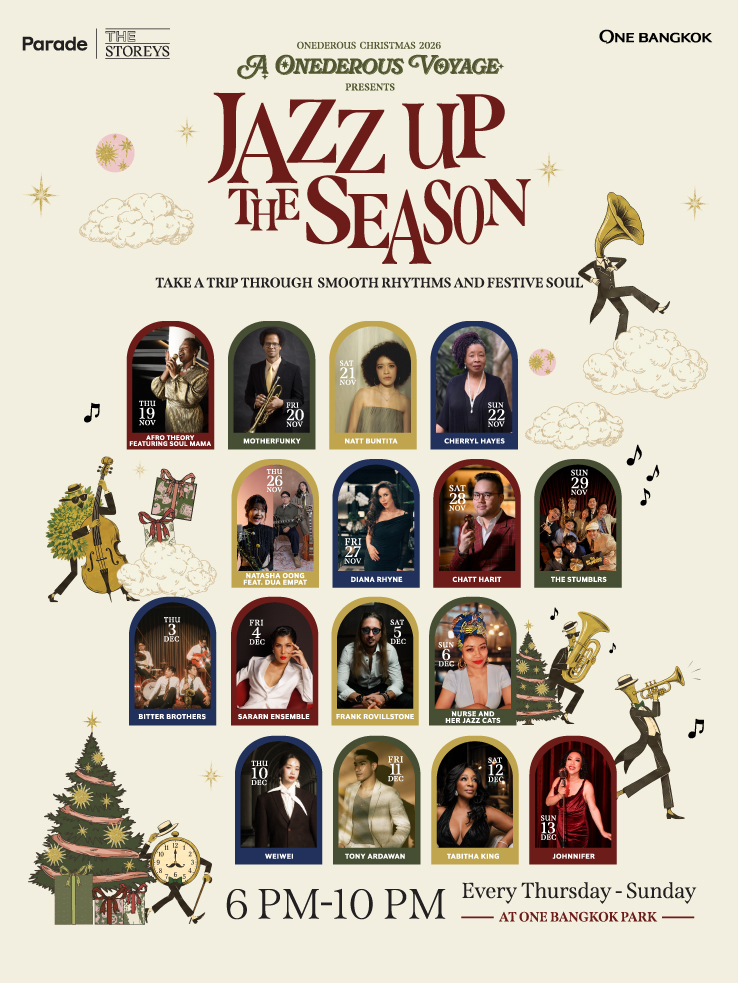
JAZZ UP THE SEASON
19 Nov - 13 Dec 2026
One Bangkok Park
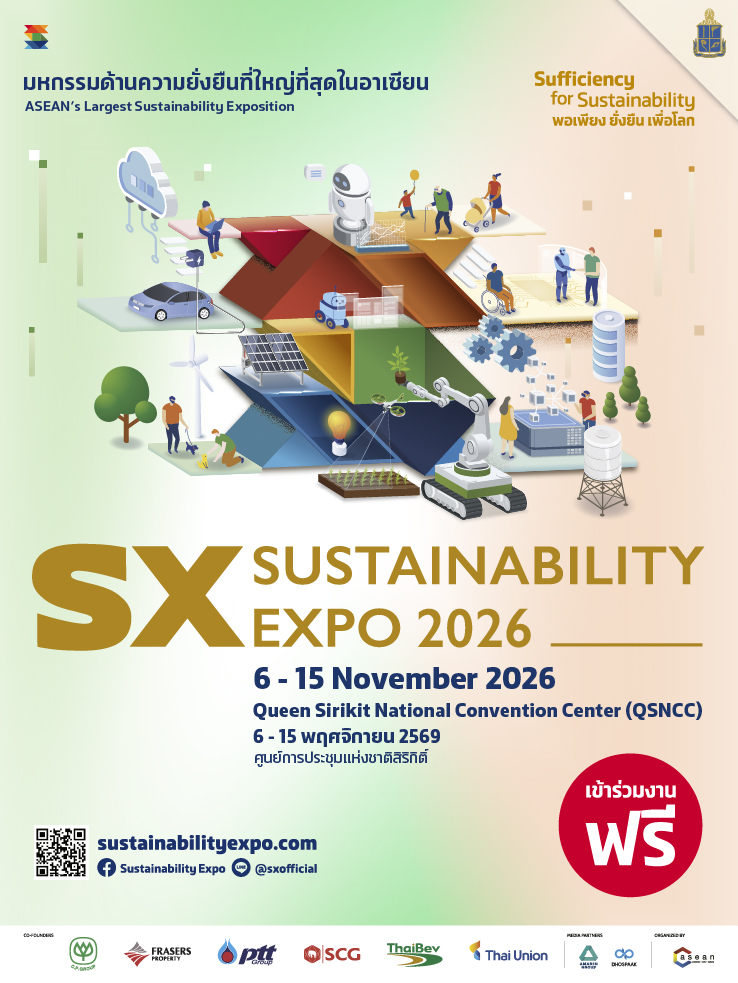
Sustainability Expo 2026
6 - 15 Nov 2026
Queen Sirikit National Convention Center
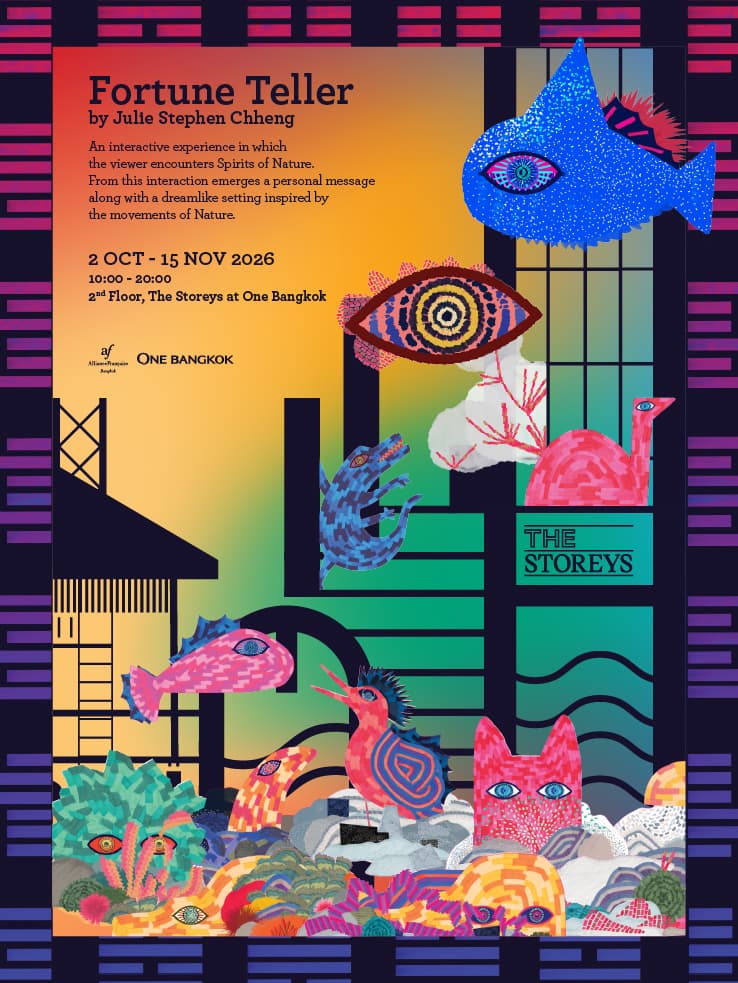
Fortune Teller by Julie Stephen Chheng
2 Oct - 15 Nov 2026
One Bangkok

Another Premium Development by





Another Premium Development by